
Sales Tax and VAT for Online Stores Selling to the US, UK and EU
A practical guide to cross-border tax for online stores: US economic nexus after Wayfair, marketplace facilitator rules, the EU OSS and IOSS schemes, UK VAT on goods up to £135, and how Shopify and WooCommerce handle collection.
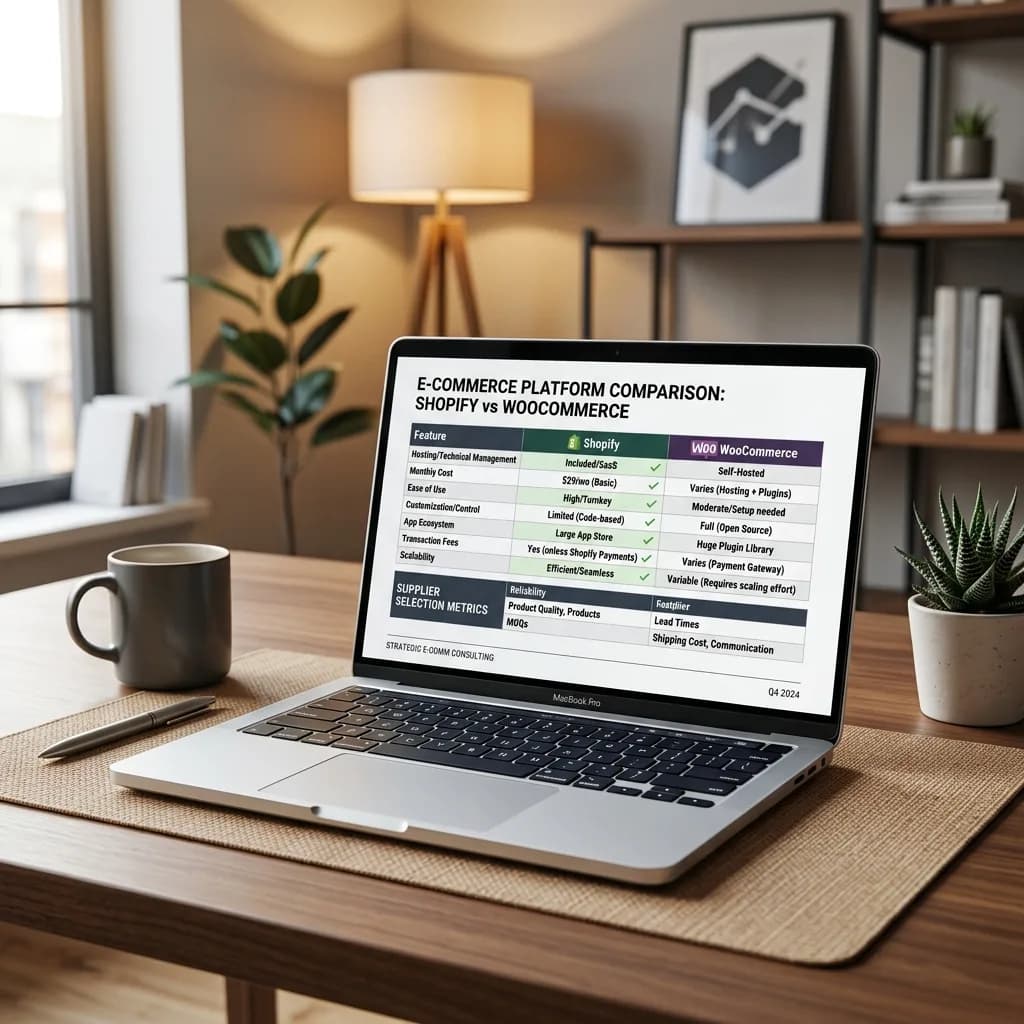
An online store that sells across borders usually has to collect tax where the customer is, not only where the business is based. In the US that obligation is triggered state by state through "economic nexus", commonly at $100,000 of sales into a state. In the EU it is triggered once cross-border sales to consumers pass €10,000 a year (or immediately, for sellers outside the EU), and in the UK overseas sellers must charge VAT at the point of sale on consignments of £135 or less.
This guide explains each regime in plain terms, shows what Shopify and WooCommerce actually automate, and ends with a setup checklist you can work through with your accountant. It reflects the rules as of 2026; thresholds change, so each section links to the official source.
*This is general information, not tax advice. Confirm your obligations with a qualified tax adviser in each jurisdiction where you sell.*
Why cross-border tax catches online stores out
Most small stores start by charging tax only in their home state or country. That works until sales grow, a new market takes off after a campaign, or the store starts shipping from a third-party warehouse. At that point three different systems apply:
- United States: there is no federal sales tax. Each state (and often its cities and counties) sets its own rates, rules and registration thresholds.
- European Union: VAT is harmonised by EU law, but rates differ by member state, and B2C distance sales are generally taxed where the goods arrive.
- United Kingdom: since leaving the EU, the UK runs its own VAT system with specific rules for imports and online marketplaces.
The common thread is destination-based taxation. The checkout has to know where the customer is, what the product is, and whether you are registered there. That is a data problem as much as a tax problem, which is why platform settings matter so much.
United States: economic nexus after Wayfair
Before 2018, a state could only require a seller to collect sales tax if the seller had a physical presence there. In South Dakota v. Wayfair, Inc., decided on 21 June 2018, the US Supreme Court overruled that physical-presence rule and upheld South Dakota's law requiring remote sellers to collect tax once they exceeded $100,000 in sales or 200 separate transactions into the state.
Every state that levies a statewide sales tax has since adopted some form of economic nexus. What varies is the detail:
- Sales threshold. $100,000 of sales into the state is the most common trigger. Some large states set a higher figure (California and Texas, for example, use $500,000). Whether the figure counts gross sales, retail sales or taxable sales differs by state.
- Transaction count. Many states originally copied South Dakota's "or 200 transactions" test, but the trend is to drop it. Utah removed its 200-transaction threshold from 1 July 2025, and Illinois removed it from 1 January 2026, leaving $100,000 of gross receipts as the only Illinois test. Other states have made similar changes, while some still keep a transaction test, so check each state's revenue department rather than relying on a single national chart.
- Measurement period. Some states look at the previous calendar year, others at the current year or a rolling twelve months.
- Timing. Once you cross a threshold, states give different windows to register and start collecting.
Low-value, high-volume stores feel the transaction test most. A shop selling $20 accessories could reach 200 orders in a state long before $100,000 of revenue; removing the transaction test means that shop may no longer need to register in those states.
Marketplace facilitator rules
If you sell through Amazon, eBay, Etsy or a similar marketplace, the marketplace is usually the one collecting and remitting sales tax on those orders. With Missouri's law taking effect on 1 January 2023, every state with a sales tax now has a marketplace facilitator law. Two practical points follow:
- 1Sales on your own Shopify or WooCommerce store are still your responsibility.
- 2States differ on whether marketplace sales count toward *your* economic nexus threshold. Some include them, some exclude them. That decides whether marketplace volume alone can push you into registration for your own store's sales.
If you run several channels, the multi-channel store setup guide covers how to keep order data consistent, which you need anyway for nexus tracking.
European Union: the July 2021 e-commerce VAT package
On 1 July 2021 the EU replaced its old per-country distance-selling thresholds with a single system. The European Commission's One Stop Shop portal sets out the three schemes:
| Scheme | Who uses it | What it covers |
|---|---|---|
| Union OSS | Sellers established in the EU (and some non-EU sellers holding goods in the EU) | Intra-EU distance sales of goods and B2C services to consumers in other member states |
| Non-Union OSS | Sellers established outside the EU | B2C services (including digital services) to EU consumers |
| Import OSS (IOSS) | Sellers or marketplaces shipping goods from outside the EU | Imported consignments with an intrinsic value not exceeding €150 |
The €10,000 threshold
An EU-established business can keep charging its home VAT rate on cross-border B2C sales while its total intra-EU distance sales of goods and cross-border telecoms, broadcasting and electronic services stay at or below €10,000 (excluding VAT) in both the current and the preceding calendar year. That €10,000 is EU-wide, not per country. Once it is exceeded, VAT is due at the rate of each customer's member state.
OSS does not remove that obligation; it simplifies it. Instead of registering in every member state, the seller registers for OSS in one member state, files a single quarterly OSS return, and pays the VAT due to all member states through it.
IOSS for goods shipped from outside the EU
A US or UK store shipping parcels directly to EU consumers has no €10,000 allowance for those imports. For consignments up to €150, IOSS lets the seller charge the customer's local VAT at checkout and declare it on a monthly IOSS return. The parcel then clears customs without the customer paying import VAT on delivery, which avoids the surprise fees and refused parcels that hurt conversion. Sellers outside the EU usually need an EU-based intermediary to register for IOSS.
Above €150, IOSS is not available; import VAT and duty are handled at the border, typically by the carrier or by the seller under a delivered-duty-paid arrangement.
One recent change matters here. From 1 July 2026 the EU ended the customs duty exemption for low-value parcels and introduced a temporary flat €3 customs duty per item on consignments valued at €150 or less, due to apply until 1 July 2028 (European Commission announcement). That is customs duty, separate from VAT, so landed-cost calculations for EU shipments need updating.
United Kingdom: VAT on imports up to £135
Since 1 January 2021 the UK no longer collects import VAT at the border on consignments of goods worth £135 or less. Instead, VAT is charged at the point of sale. Under HMRC's guidance for overseas sellers, a business selling such goods directly to UK consumers must register for UK VAT and charge it at checkout. If a UK VAT-registered business customer provides its VAT number, the customer accounts for the VAT instead.
Marketplaces change the picture. According to HMRC's online marketplace guidance:
- For imported consignments of £135 or less sold through an online marketplace, the marketplace is liable for the VAT.
- For goods of any value already located in the UK and sold by an overseas business through a marketplace, the marketplace is also liable, and the seller is treated as making a zero-rated supply to the marketplace.
Consignments above £135 follow normal import rules, with import VAT and any duty collected at the border.
UK-based sellers face the mirror image when selling into the EU: after Brexit, a UK business cannot use the Union OSS scheme for goods shipped from the UK, so IOSS (for goods up to €150) or an EU fulfilment arrangement is the usual route.
How Shopify handles tax collection
Shopify's built-in tax engine is Shopify Tax. As of 2026, Shopify describes it as offering the deepest automation for merchants selling to customers in the United States, the European Union, the United Kingdom and Canada. Relevant capabilities include:
- US liability insights. Shopify's tax liability insights page flags states where your store may have nexus based on your sales. Shopify is clear that it is not a substitute for professional advice.
- Automated US filing. Shopify offers automated filing with Shopify Tax for US stores, subject to eligibility conditions such as having used Shopify Tax rather than another tax service.
- EU and UK registrations. In its EU and UK feature documentation, Shopify lets you record Union OSS, IOSS, non-Union OSS, the €10,000 micro-business exemption or country-by-country registrations, and it notes that a UK-based merchant selling physical goods to the EU needs IOSS rather than Union OSS.
- Shopify Markets. Markets controls which countries you sell to, local currencies and whether prices are shown tax-inclusive, which matters because EU and UK consumers expect VAT-inclusive prices.
Shopify still expects you to register with each tax authority yourself and to confirm that rates, registrations and returns are correct. Adding a registration in Shopify tells the checkout to collect; it does not register you with the state or member state.
How WooCommerce handles tax collection
WooCommerce gives you three broad options:
- 1Core tax settings. WooCommerce includes standard, reduced and zero rate tables that you maintain manually by country, state, postcode and city. This is workable for a store registered in a handful of places, but you are responsible for keeping every rate current.
- 2WooCommerce Tax. The free WooCommerce Tax extension calculates tax at checkout from your store address and the customer's address, with automated calculation available for the US, Canada, Australia, the UK and EU member states. It requires a WordPress.com connection. Its documentation is explicit that it does not file returns, remit tax or determine where you have an obligation, and it does not discover obligations in states beyond your store location, so extra US states need manual rates.
- 3Third-party tax services. Services such as Avalara, TaxJar, Quaderno and Stripe Tax offer WooCommerce integrations with broader rate coverage, nexus monitoring and, depending on the service and plan, return filing. Compare which jurisdictions each files in, how they handle OSS and IOSS, and how they deal with refunds and partial returns before choosing.
WooCommerce's flexibility also means more places for errors: product tax classes, shipping tax, prices entered inclusive or exclusive of tax, and plugins that modify the cart. If you are also running multiple currencies, the WooCommerce multi-currency guide explains where currency conversion and tax calculation interact. For a platform-level comparison, see Shopify vs WooCommerce.
Cross-border tax setup checklist
Work through this list with your accountant before launching in a new market, and revisit it every quarter.
Map your exposure
- [ ] Export 12 months of orders with ship-to country, state or region, order value, tax charged and sales channel.
- [ ] Separate marketplace orders from own-store orders.
- [ ] Total own-store sales (and, where relevant, transaction counts) per US state against each state's current threshold and measurement period.
- [ ] Total intra-EU B2C distance sales against the €10,000 threshold (EU-established sellers only).
- [ ] Identify consignments to the EU at or below €150 and to the UK at or below £135.
Register
- [ ] Register in each US state where you have crossed a threshold or have physical presence (including inventory in third-party warehouses).
- [ ] Decide between Union OSS, IOSS or local registrations in the EU; appoint an intermediary if IOSS requires one.
- [ ] Register for UK VAT if you sell goods of £135 or less directly to UK consumers from overseas, or hold stock in the UK.
Configure the store
- [ ] Enter every registration in Shopify Tax, WooCommerce or your tax service; collection should start only where you are registered.
- [ ] Assign correct product tax categories or tax classes, especially for clothing, food, digital goods and books.
- [ ] Decide tax-inclusive or tax-exclusive pricing per market.
- [ ] Show VAT on invoices and order emails where required, including your VAT or IOSS number.
- [ ] Update landed-cost logic for the EU €3 low-value duty from 1 July 2026.
Operate
- [ ] Reconcile tax collected against tax filed each period.
- [ ] Handle refunds and cancellations so that tax adjustments flow into the next return.
- [ ] Store exemption certificates for US B2B and wholesale customers.
- [ ] Recheck thresholds quarterly and after any major sales spike.
- [ ] Keep records for the period each authority requires.
Reliable tax collection depends on clean checkout data, correctly configured tax classes and a store that records where each order ships. If you want help configuring Shopify Tax, WooCommerce tax settings or a third-party tax service integration for US, UK and EU customers, see our e-commerce solutions or get in touch to talk through your setup.
Related posts

E-commerce Requirements Workshop: Discovery and Approval
Turn stakeholder assumptions into an approved e-commerce brief using sample orders, decision logs and testable acceptance criteria.
Read article →
Shopify vs WooCommerce Checkout Comparison
A practical checkout comparison for store owners choosing between Shopify and WooCommerce.
Read article →
Product Page SEO Services Guide for E-commerce Brands
A practical guide to product page SEO services for Shopify, WooCommerce and marketplace-connected stores.
Read article →
Author
Anushka Dahanayake
Anushka Dahanayake builds SEO-focused websites, e-commerce platforms, dashboards, and automation systems for businesses worldwide.