
E-commerce Email Capture Guide for Store Growth
A practical guide to capturing email subscribers without damaging the shopping experience.
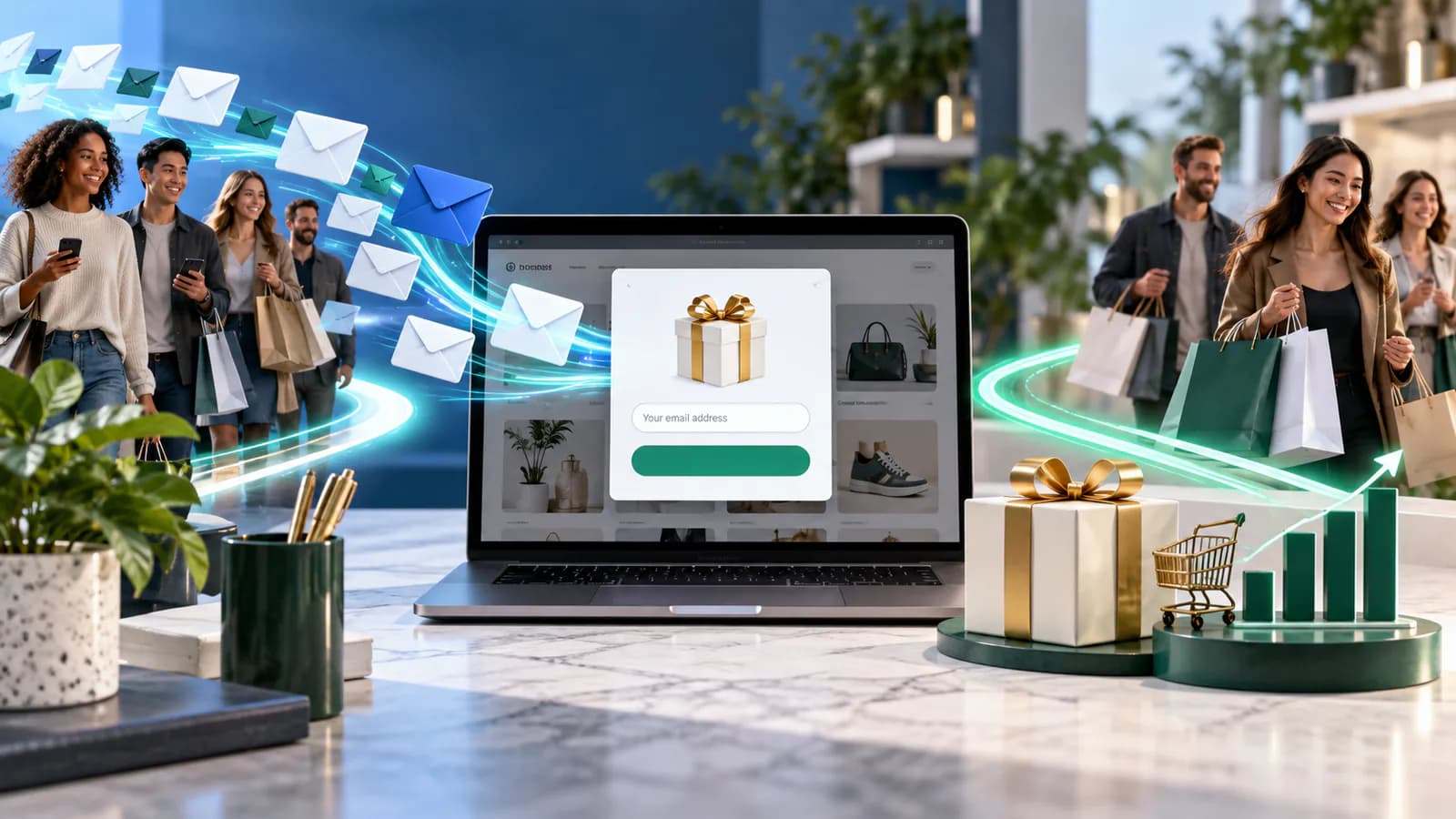
Email capture works when the offer is useful enough for a visitor to choose an ongoing relationship with the store. A large subscriber count is not valuable if people joined accidentally, never receive the promised benefit or immediately unsubscribe because the messages do not match their expectations.
Design the signup, permission record and follow-up as one experience. The form is only the entry point. The commercial test is whether the store earns attention from suitable customers without making shopping harder for everyone else.
Choose a reason to subscribe
Match the signup value to the product and audience. A discount can work for a price-sensitive first order, but it is not the only option. A useful buying guide, restock notification, early access to a genuine launch or care advice may fit the store better.
Be precise about the exchange. "Get the desk measurement checklist" promises one resource. "Get product news and offers" promises ongoing marketing. Explain both where both are intended, rather than using a useful download as an unclear route into unrelated promotions.
Consider margin and buyer behavior before defaulting to a percentage discount. A visitor already ready to buy may claim the offer without any additional value to the business. A niche store may earn stronger relationships by helping customers choose correctly.
Match the form to the visitor's task
Place signup opportunities where they make sense. A buying guide can include an invitation to receive a printable checklist. An unavailable product can offer an appropriately described restock alert. A footer form can serve visitors deliberately seeking updates.
Avoid interrupting checkout or blocking essential product information with an immediate overlay. Customers should be able to inspect the offer before being asked to subscribe. On mobile, check that the form can be dismissed easily and does not hide controls needed to continue shopping.
Set display rules intentionally. A returning subscriber should not repeatedly see the same acquisition popup. A customer who has just declined should not face another interruption on the next page. Document the intended behavior and test it across the actual devices and sessions supported.
Collect only what the follow-up needs
An email address may be enough for an initial signup. Add fields only when they support a clear purpose. A preference for product category can improve relevance; a birth date or phone number may add unnecessary friction and data responsibilities.
Use readable labels and useful validation messages. Tell the visitor when the address appears incomplete without deleting their input. Do not reject legitimate addresses simply because the domain is unfamiliar or the format is less common.
Test autofill and keyboard behavior on a phone. Ensure the submit control remains accessible and the success message appears in a way the visitor can recognize. An attractive form that silently fails is worse than a plain reliable one.
Define permission and expectations clearly
The applicable rules depend on location, audience and purpose. For UK electronic marketing, the ICO's email marketing guidance explains consent and the conditions around the existing-customer exception. Do not treat every purchase or account creation as blanket permission for marketing.
EU member states apply similar ePrivacy rules alongside the GDPR, so an unticked opt-in box and a record of what was consented to is the safe default for EU and UK subscribers. US commercial email falls under the FTC's CAN-SPAM Act guidance, which is opt-out based but still requires accurate sender details, a physical postal address and a working unsubscribe that is honoured promptly. Stores with California customers should also check how the CCPA/CPRA applies to the data they collect.
Use wording that accurately describes the messages and sender. Keep permission records appropriate to the chosen process, including what the person was told and when they subscribed. Have the requirements reviewed for the markets involved.
Distinguish transactional communication from marketing. An order confirmation or a narrowly requested availability alert should not be used as an excuse to add unrelated promotions without the necessary basis. The system and content need to reflect that distinction.
Deliver the promised benefit immediately
After signup, explain what happens next. If a confirmation step is used, tell the visitor to look for it and what it enables. If the resource is available immediately, make the access route clear rather than leaving the customer waiting for an unspecified email.
Test the complete sequence with a fresh address. Check the sender name, subject, delivery, links and mobile presentation. A discount should have understandable conditions and work in the intended basket. A guide should open without requiring another unexpected signup.
Consider failure recovery. If the email does not arrive, provide a reasonable way to get help or retry without creating duplicate subscriptions. Support should know how to check status without asking the customer to disclose unnecessary information publicly.
Build a welcome sequence around the actual promise
The first message should deliver the benefit and establish context. Later messages can help the subscriber choose, understand the range and use the product. Avoid sending a rapid series of unrelated promotions simply because an automation tool makes it easy.
For a hypothetical home-office store, a measurement checklist signup might lead to guidance on desk depth, then a comparison of compact desk styles. A message about office lighting can be relevant later, but a sudden promotion for unrelated clearance accessories may feel disconnected.
Set frequency based on useful content and operational capacity. State expectations honestly and provide an easy unsubscribe route. A consistent moderate schedule is easier to trust than long silence followed by several daily sales messages.
Segment using meaningful signals
Keep signup source and requested topic with the subscriber where appropriate. Someone interested in replacement parts may need different content from someone exploring a complete setup. Use explicit preferences and relevant behavior carefully rather than inventing sensitive assumptions.
Avoid creating so many segments that the team cannot maintain them. Begin with distinctions that change the message materially, such as new subscriber versus customer or one major product interest versus another.
Review how purchases affect the sequence. A customer who buys the featured product should not continue receiving messages that imply they are still deciding whether to purchase it. Shift toward setup or care guidance where the system and permission model support that communication.
Measure subscriber quality and shopping impact
Track form exposure, successful signups, confirmation where used, benefit delivery, unsubscribes and downstream purchases. Review spam complaints and delivery problems as quality signals, not just technical annoyances.
Measure the effect on the wider store. A popup may increase signups while reducing product interaction or checkout completion. Compare the value of acquired subscribers with the discount cost and any interference with shopping.
Keep attribution limitations visible. A purchase after an email does not necessarily mean the email caused it. Use consistent reporting definitions and suitable comparisons before claiming a particular signup form generated incremental revenue.
Maintain the capture system
Assign an owner to the offer, form, integrations and welcome content. Test again after theme changes, email platform migrations and promotion updates. Remove expired discount language from the form and the automated messages together.
Review retention and deletion practices with the responsible team. Suppression lists and unsubscribe status must remain effective when data moves between systems. Re-importing an old export should not quietly restart marketing to people who opted out.
Keep a small operational checklist: form submits, permission records are correct, promised benefits arrive, links work, discounts behave as described and unsubscribe requests are honored. These checks protect the experience customers actually chose.
Frequently Asked Questions
Is a discount required to collect emails?
No. Useful guidance, relevant updates or a clearly requested alert can provide value. Choose an offer that fits the product and the relationship you intend to maintain.
Should every visitor see a popup?
Not necessarily. Use placement and timing that fit the task, and test the effect on shopping. A persistent footer or contextual form may be sufficient for some stores.
What is a good signup rate?
There is no universal target that proves commercial value. Audience, offer and placement affect the rate. Evaluate subscriber quality, cost and subsequent behavior together.
The checkout optimization guide helps identify interruptions in the purchase path. The analytics revenue validation guide supports a more reliable evaluation of downstream orders.
Conversion Rate Optimization (CRO) can diagnose whether email capture interrupts the shopping funnel and test alternatives that preserve a clear shopping experience.
Related posts

Product Pricing Page Guide for Digital Products
A practical guide to pricing pages for templates, downloads, courses and other digital products.
Read article →

Etsy to Shopify Expansion Guide
A practical guide for Etsy sellers building an owned Shopify store without losing marketplace momentum.
Read article →
eBay to WooCommerce Expansion Guide
A practical guide for eBay sellers building an owned WooCommerce store.
Read article →
Author
Anushka Dahanayake
Anushka Dahanayake builds SEO-focused websites, e-commerce platforms, dashboards, and automation systems for businesses worldwide.