
Etsy to Shopify Expansion Guide
A practical guide for Etsy sellers building an owned Shopify store without losing marketplace momentum.

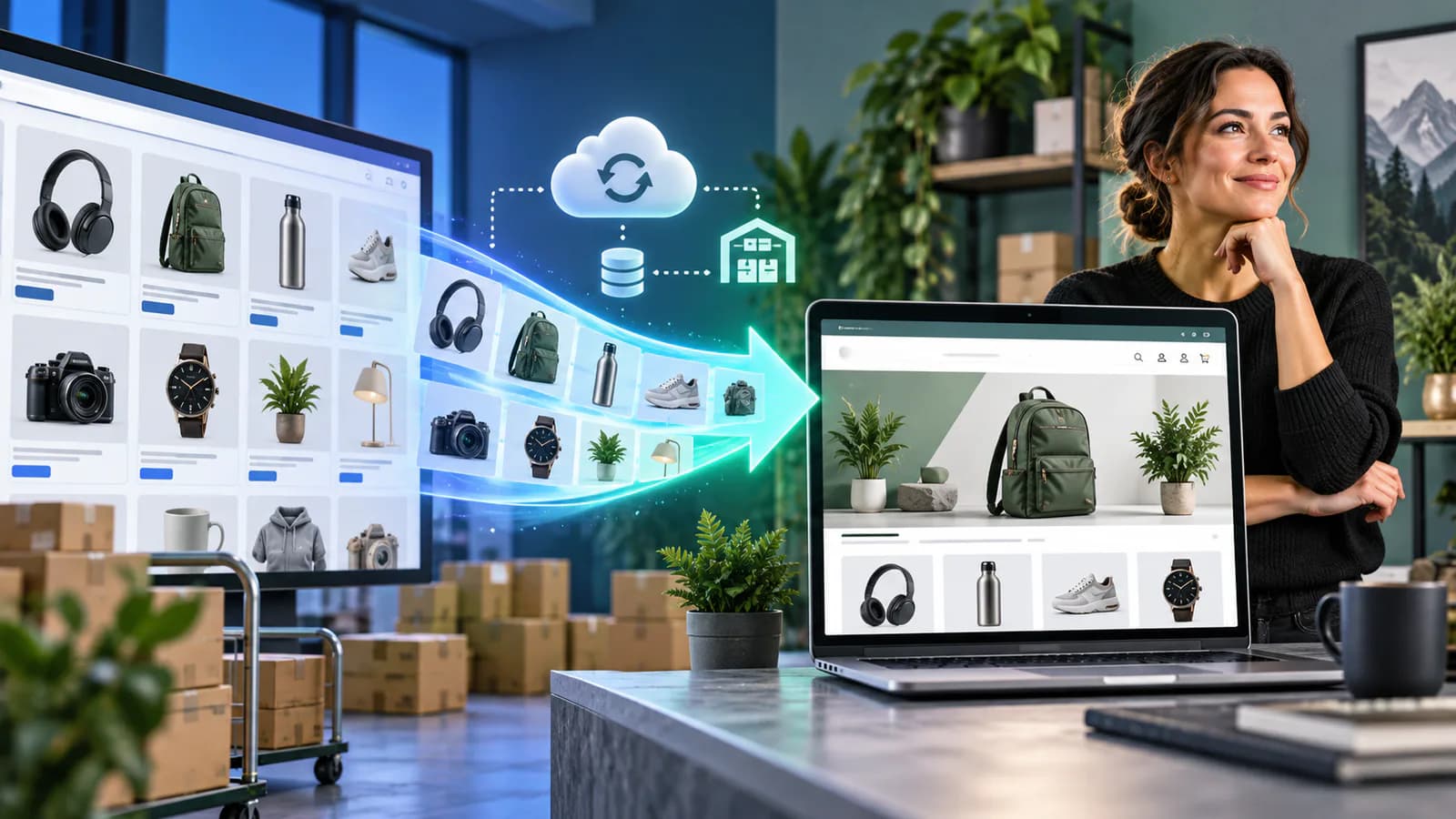
Expanding from Etsy to Shopify means adding an owned-store operation, not simply moving listing text into a different layout. Etsy supplies a marketplace context in which customers already understand the search, checkout and review environment. A Shopify store must explain the brand, organize the range and earn purchase confidence on its own.
Treat the expansion as a staged second-channel launch. Preserve the Etsy operation while validating product data, inventory, payments and acquisition for the owned store. The objective is a manageable additional business asset, not a larger collection of disconnected listings.
Define why the owned store should exist
Write the role Shopify will play. It may present a broader brand story, support a more useful collection structure, sell a different assortment or provide a destination for independently acquired traffic. "Lower fees" is not a complete business case because the owned store also needs software, payment processing, support and customer acquisition.
Identify the first audience and buying task. A maker selling personalized stationery might begin with wedding planners comparing coordinated invitation suites. That calls for a different store structure from an Etsy shop organized around individual listings and occasions.
Set an initial scope that the team can maintain. A carefully prepared range with reliable stock and clear options is preferable to importing every historical listing, including experiments and retired designs that no longer represent the business.
Keep marketplace activity within marketplace rules
Build the Shopify audience through permitted, independently managed channels. Do not use Etsy messages or an in-progress Etsy transaction to redirect buyers off-platform. Review Etsy's current off-platform transaction policy when planning communications and promotions.
Customer information also needs appropriate handling. Possessing an order email address does not automatically establish permission for an unrelated marketing list. Review the applicable privacy and marketing requirements before transferring contact data into a new campaign system.
Keep the operational distinction clear for staff. Etsy orders should remain supported through the appropriate Etsy process, while Shopify orders use the owned-store process. A customer should not be sent back and forth because the team cannot identify which channel owns the transaction.
Audit the product data before importing
Create a master product list with stable SKUs, option names, images, dimensions, materials, prices and stock logic. Separate physical products, digital products and personalization requirements. Resolve duplicate or inconsistent variant labels before they spread into the new store.
Shopify's Etsy migration guidance describes current migration options. Verify the supported data and review an import sample rather than assuming every listing field, image relationship or historical record transfers exactly as needed.
Choose difficult pilot products: a simple item, a personalized item, a multi-variant item and a product with a fulfillment exception. Inspect the destination fields and the customer-facing page after import. A successful import report does not prove the offer is understandable.
Rebuild the browsing structure for the brand
Organize collections around how customers compare and buy. The stationery maker might use invitation suites, save-the-date cards and finishing accessories, with a separate route for coordinated sets. Avoid reproducing every Etsy search phrase as a collection.
Write useful collection introductions and selection guidance. Explain paper options, quantities, sample ordering and personalization steps where relevant. Customers need enough context to understand differences before opening several similar products.
Keep navigation stable and literal. Campaign names can support merchandising, but ordinary product routes should remain easy to find. Test the structure with someone who has not seen the Etsy shop and therefore cannot rely on prior familiarity.
Adapt product pages to an owned-store decision
Explain exactly what the customer receives, what they need to provide and what happens after purchase. For personalized stationery, distinguish the order confirmation, proof approval and production stages. Do not make the customer infer the process from a free-text personalization box.
Use photographs that show materials, scale and included components. Keep mockups clearly representative of the actual product. If a sample pack contains different items from the full suite shown in the main image, make that distinction prominent.
Build trust with accurate business details, clear support routes and truthful policies. Do not fabricate reviews to replace the marketplace's reputation context. Reuse customer content only where permission and presentation accurately support the intended use.
Establish one inventory source of truth
Decide whether Etsy and Shopify share the same stock pool, use allocated quantities or connect through a supported inventory system. Record which system owns quantity changes and how returns or cancellations restore stock.
For made-to-order goods, capacity may be the scarce resource rather than finished inventory. Selling unlimited units on two channels can overload production even if materials are available. Define order capacity and lead-time updates across both channels.
Test an order, cancellation and return in each channel using an authorized controlled process. Verify the other channel reflects the intended availability. The cross-listing inventory guide develops the risks around competing stock updates and overselling.
Configure checkout from the actual operation
Confirm payment eligibility for the selling entity and bank, supported currencies and the desired customer markets. Verify shipping rates using real baskets and addresses. Tax settings should follow approved requirements, not assumptions copied from the Etsy order screen. Marketplaces often collect and remit US sales tax as marketplace facilitators, and can handle some EU and UK VAT, on the seller's behalf. On an owned store that responsibility usually moves to the seller, so review US economic-nexus exposure and EU OSS/IOSS registration with an adviser before launch. This is general information, not tax advice.
Test discounts, personalized products and mixed baskets. Ensure order notifications contain the information production needs. A customer should receive clear next steps without exposing internal notes or requiring them to repeat details already submitted.
Run a refund rehearsal and check support access. The owned store now needs its own reliable payment and recovery workflow. Include those operations in launch readiness rather than considering them something to solve after the first complaint.
Plan acquisition independently
Choose a small number of channels the business can operate consistently. Search-focused collections, useful buying content and Pinterest may fit a visual product range. Other products may rely more on direct partnerships or an existing permission-based audience.
Give each campaign a relevant destination and a measurable objective. A Pin about choosing invitation paper should reach useful guidance, while a product-led advertisement should reach the matching offer. Sending every visitor to the homepage wastes the specific intent you earned.
Budget for learning. An owned store does not inherit Etsy's discovery automatically. Track qualified visits, product interaction, orders and contribution before expanding spend or assuming the platform itself is the reason for weak results.
Launch in controlled stages
Complete the pilot range, test orders and support rehearsal before broad promotion. Keep a short issue list with owners and priorities. Missing product data, broken personalization and incorrect shipping are launch blockers; minor decorative preferences are not equivalent risks.
After launch, compare order handling time and error rates across the two channels. Review repeated customer questions and improve the owned-store content. Maintain the Etsy channel deliberately rather than allowing its stock or dispatch messages to decay while attention shifts.
Document the expansion process so future products follow it. The durable result is a shared catalog and operating model with channel-specific presentation, not a one-time export that becomes inconsistent a week later.
Frequently Asked Questions
Should Etsy close when Shopify launches?
Not automatically. Evaluate each channel's role, contribution and operational cost. Expansion can work with both channels when stock and support remain coordinated.
Can Etsy descriptions be reused?
Accurate product facts can carry over, but the owned store usually needs different navigation, process explanations and trust context. Review every imported page as a new customer's destination.
Will Shopify immediately replace marketplace traffic?
No automatic transfer of demand should be assumed. Build an acquisition plan and measure it independently while preserving the functioning marketplace operation.
The Shopify store creation guide covers the platform launch workflow. The multi-channel store setup guide explains the wider operating model.
E-commerce Website Development covers a scoped store build with catalog, checkout, payments, shipping, integrations, testing and handover; plan how it connects to the Etsy catalog and shared operations as a staged expansion.
Related posts

Product Pricing Page Guide for Digital Products
A practical guide to pricing pages for templates, downloads, courses and other digital products.
Read article →
eBay to WooCommerce Expansion Guide
A practical guide for eBay sellers building an owned WooCommerce store.
Read article →

Pinterest and Shopify Strategy Guide
A practical guide to using Pinterest alongside a Shopify store for discovery and sales support.
Read article →
Author
Anushka Dahanayake
Anushka Dahanayake builds SEO-focused websites, e-commerce platforms, dashboards, and automation systems for businesses worldwide.