
Abandoned Cart Email Strategy: Audiences and Messages
Build cart recovery messages around buyer hesitation, relevant reassurance and contribution, with clear audience and discount decisions.
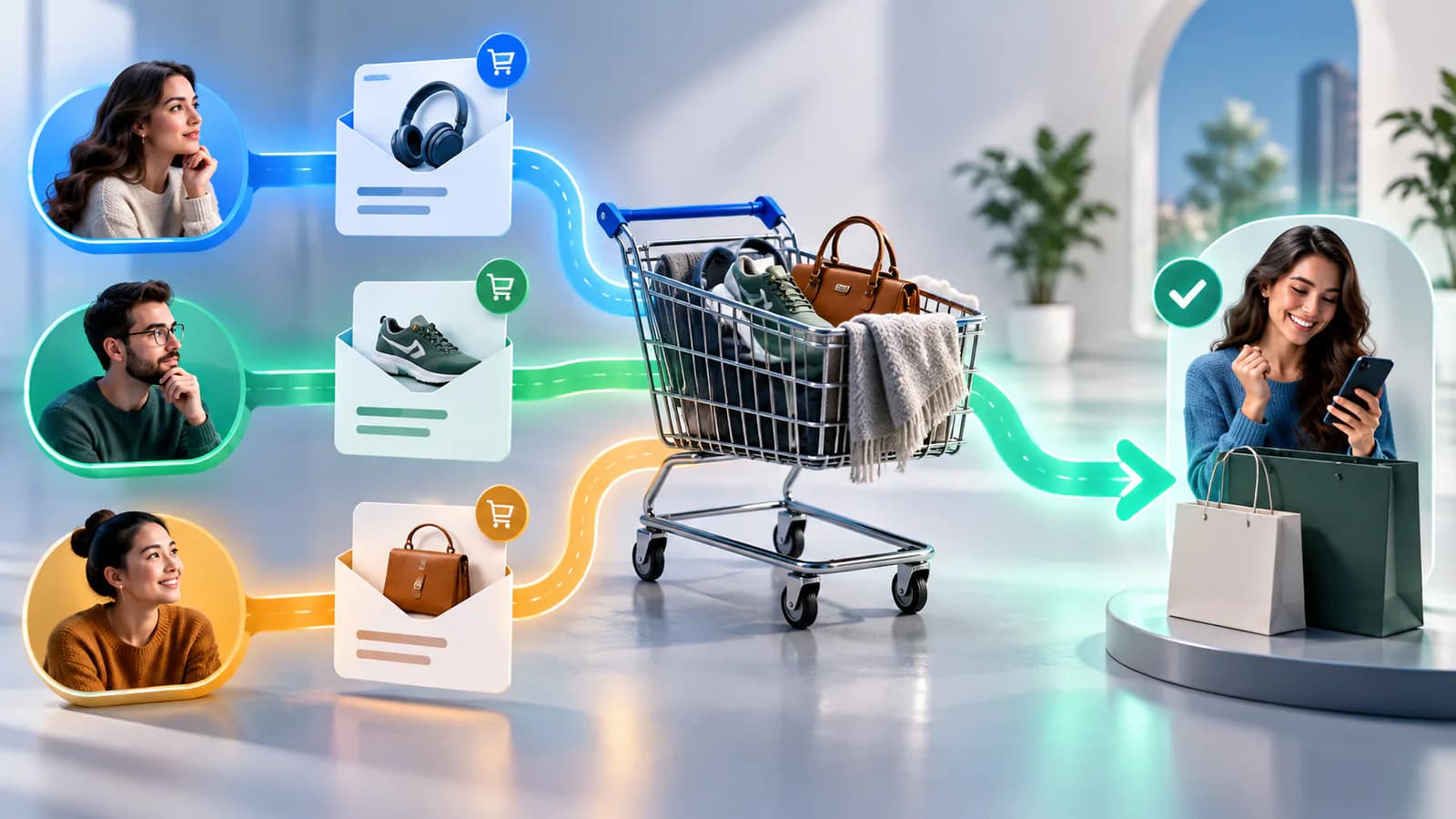
An abandoned-cart email should help an interested shopper resolve the reason they paused. Sometimes that means remembering the product. Sometimes it means understanding delivery, fit or payment options. A discount is only one possible response, and often an expensive first assumption.
Build the strategy around audiences and messages before choosing a sequence length. This guide focuses on what to say, who should receive it and how to judge the commercial value. The underlying implementation must also respect current eligibility, consent and recovery rules, but technical automation alone cannot create a persuasive or helpful message.
Know the email rules for the markets you sell to. In the UK and EU, treat a recovery email as direct marketing: send it where the shopper has consented, or where the UK PECR "soft opt-in" or an equivalent national rule applies, which generally depends on collecting the address during the purchase process and offering a clear opt-out at that point. The ICO's direct marketing guidance explains the UK position. In the US, the FTC's CAN-SPAM compliance guide requires accurate headers and subject lines, a valid postal address and an unsubscribe route that is honored within 10 business days. This is general information, not legal advice.
Understand what abandonment means for your store
A cart can be a comparison tool, a temporary shopping list or an unfinished purchase. Do not assume every shopper intended to buy immediately. Review customer questions, delivery-cost visibility and the checkout journey to identify likely sources of hesitation.
Distinguish cart activity from an identifiable abandoned checkout. The store cannot necessarily email everyone who adds an item. Shopify's abandoned-checkout documentation describes its recovery features and relevant conditions; verify the current behavior of your platform and messaging tool before defining the reachable audience.
Look for fixable friction before writing persuasive copy. Unexpected delivery costs, unavailable payment methods and unclear return information can affect many shoppers. The checkout optimization guide helps review those issues so email does not become a permanent workaround for a weak purchase path.
Segment by meaningful needs
Begin with a few distinctions that change the message. A first-time buyer may need reassurance about the business and delivery. A returning customer may need a simple product reminder. A shopper considering a technical item may need compatibility help more than a coupon.
Product category can be a useful signal when it reflects a real decision. Clothing may require sizing support; bulky furniture may require delivery-access information. Avoid creating dozens of segments from data that does not change the helpful answer.
Keep the message respectful of what you actually know. Do not tell someone they loved a product or urgently need it based only on cart activity. Use neutral language that acknowledges the saved items and offers a clear next step.
Choose one job for each message
A first message might remind the shopper of the item and provide a reliable return route. A later message might answer a recurring objection. A final message, if justified, could explain an eligible offer or invite a question. This is a planning pattern, not a universal schedule.
Do not send several emails that repeat the same product grid with a different subject line. Each contact should add a reason to be useful. If there is no new information or legitimate offer, fewer messages may be the better strategy.
Write the intended response beside each draft: return to the product, inspect delivery information, ask a compatibility question or complete checkout. That makes the message easier to edit and prevents several competing calls to action from diluting it.
Write a useful reminder
Identify the item clearly with a recognizable image, name and relevant variant. Give the shopper a straightforward route back to the purchase context. Avoid a vague shop now button that sends them to the homepage and requires rebuilding the decision.
Use a subject line that accurately reflects the email. Your selected items are still here is safer only when the underlying availability supports that wording. If stock is not reserved, do not imply that the business is holding the item exclusively for the recipient.
Keep supporting copy short and specific. A first-time buyer may appreciate a link to delivery and returns information or a monitored support route. Avoid filling the email with a full brand history when the immediate task is recognizing the product and continuing.
Address hesitation with evidence
Choose reassurance based on actual customer questions. If buyers ask whether a lamp fits a standard socket, link to verified compatibility information. If delivery timing is the concern, explain how the current estimate is obtained rather than promising a date the system cannot support.
Use genuine product reviews or proof with appropriate context and permission. Do not imply that every customer gets the same result or that a testimonial resolves a technical compatibility question. Evidence should answer the concern it is placed beside.
For an illustrative home-office store, a second email for a desk might link to dimensions, assembly information and delivery-access guidance. That is more relevant than a generic message about shopping with confidence. The message should help the buyer decide whether the desk fits their situation, even if the answer is no.
Set discount rules from contribution
Calculate what remains after product cost, fulfillment, payment fees and the proposed reduction. A recovered sale is not automatically a profitable sale. Consider whether the customer may have returned without the incentive and whether repeated discounts train shoppers to wait.
For example, an order with 25 units of contribution before marketing loses 10 units of that contribution when a 10-unit discount is applied. If the business needs the remaining margin to cover acquisition and overhead, the offer may be unsuitable. Use the store's actual economics and verify current fee assumptions separately.
Define eligibility and exclusions clearly. Some products, bundles or existing promotions may not support another reduction. Make the terms understandable in the email and ensure the destination honors them. A rejected code at checkout can create more frustration than sending no discount.
Choose timing from the buying context
Consider how quickly the product is normally evaluated, when support is available and whether the purchase is time-sensitive. A low-cost replenishment item and a large furniture purchase may need different follow-up rhythms. Treat suggested timing as a testable hypothesis rather than a rule.
Avoid messaging so quickly that it interrupts someone still comparing or checking out. Coordinate the campaign with other promotional emails so the customer does not receive several overlapping contacts. The operational team should confirm that completed purchasers and ineligible recipients are excluded according to the platform's supported workflow.
For seasonal products, be careful with urgency. Use a real delivery cutoff or genuine offer end date when applicable. Do not invent scarcity or repeatedly reset a deadline. The destination should explain what is currently available when the shopper returns.
Review the whole email-to-store experience
Open the message on a phone and follow every important link. Check image loading, product identity, readability and the route back to the item or checkout. The offer should remain coherent if the shopper opens the email later than expected.
Test what the message communicates when an item is unavailable or a price has changed. The technical recovery behavior belongs in implementation testing, but the strategy must decide what alternative is appropriate. A comparable product may help; a random collection may not.
Ask support staff to read the draft. Can they answer the questions the email invites, and do they recognize the promises being made? A message offering personal help creates a service expectation that somebody must fulfill.
Check the tone with an actual customer question
Read the proposed reminder beside a real, anonymized support question about the product. Does the email answer the concern or simply repeat the offer more insistently? Replace pressure with the specific information the customer needs. This review is particularly useful when a sequence has accumulated several promotional messages but no clear reason for each contact.
Measure incremental value with caution
Track delivered messages, useful clicks, purchases, discounts and relevant customer feedback. Email opens alone are a weak basis for judging commercial success. Platform-attributed revenue should not automatically be treated as revenue caused by the sequence.
Where volume and tooling permit, use an appropriately designed holdout or comparison to estimate incremental effect. For smaller stores, combine directional performance with margin and customer feedback. State the uncertainty rather than claiming a precise lift from a handful of orders.
The GA4 revenue-validation guide helps reconcile the store journey with analytics. Use consistent definitions when comparing email reports, store orders and overall sales so the same purchase is not counted as several independent wins.
Frequently Asked Questions
Should the first email include a discount?
Only when the audience, economics and offer strategy justify it. Many shoppers first need a reminder or a specific answer. Test a helpful message before assuming price is the obstacle.
How many reminders should I send?
Use only as many as have a distinct useful purpose and fit the customer's context and applicable messaging rules. More contacts can increase annoyance without improving retained contribution.
What should a checkout engagement cover?
Bring customer questions, sample messages, margin constraints and the current purchase journey to Checkout Optimization. The strategy should connect recovery messaging with clearer product and checkout information, so customers can complete a purchase for the right reasons.
Related posts

Product Pricing Page Guide for Digital Products
A practical guide to pricing pages for templates, downloads, courses and other digital products.
Read article →

Etsy to Shopify Expansion Guide
A practical guide for Etsy sellers building an owned Shopify store without losing marketplace momentum.
Read article →
eBay to WooCommerce Expansion Guide
A practical guide for eBay sellers building an owned WooCommerce store.
Read article →
Author
Anushka Dahanayake
Anushka Dahanayake builds SEO-focused websites, e-commerce platforms, dashboards, and automation systems for businesses worldwide.