
Service Page SEO Guide for Business Websites
A practical guide to making service pages more useful for search visibility and lead generation.

A service page should help a prospective customer decide whether your business can solve their problem. Search visibility brings people to that decision; clear scope, credible evidence and a usable contact path help them act. Optimizing only the title and keywords leaves most of the commercial work unfinished.
This guide is for businesses with genuine services that need stronger website explanations. The aim is to make each page useful enough to stand on its own while fitting into a coherent site, without creating several near-identical pages that compete for the same buyer question.
Give each page one commercial purpose
Write the question the page should answer. "Can this company maintain our office air-conditioning system?" is more useful than "rank for maintenance." It identifies the service, the buyer and the context.
Separate genuinely different offers where buyers need different information. Installation, emergency repair and ongoing maintenance may deserve distinct pages because scope, urgency and buying criteria differ. Minor wording variations of the same service usually do not justify additional pages.
Create a page map with primary audience, service scope, geographic relevance and next action. If two pages have the same entries in all four columns, review whether they should be combined. The keyword cannibalization guide can help when existing pages already overlap.
Research the buyer's language
Use sales calls, inquiry emails, proposals and support questions to understand how customers describe the problem. Technical terminology may be necessary, but it should connect to the words a buyer recognizes.
Review relevant search results to understand whether people expect a service provider, a comparison or an instructional guide. A commercial service page should not imitate a tutorial if the visitor's real question is about hiring help.
Group related phrases by intent rather than assigning every phrase a separate URL. A page can naturally explain emergency response, service coverage and maintenance scope without repeating an exact keyword in every heading. The content should sound like a competent person explaining the offer.
State the offer early
The opening should identify the service, the customers it suits and the main result or deliverable. Avoid beginning with several paragraphs about the company's commitment to excellence before explaining what it actually does.
For example, a bookkeeping service page could explain that it organizes monthly records and reporting for small businesses using specified systems. It should clarify whether payroll, tax filing or historical cleanup is included or separately scoped.
This is also where a visitor should see the next action. "Request a bookkeeping review" sets a clearer expectation than an unexplained "Get started." Keep the action consistent with the sales process and the information the business is ready to provide.
Explain scope in terms customers can compare
Describe what is included, what is excluded and what information is required to begin. A concise deliverables list can be more useful than a long paragraph of broad benefits.
If pricing depends on scope, explain the drivers. A website project may depend on page types, content readiness and integrations. A cleaning contract may depend on area, access and frequency. You do not need to publish a fixed price to explain why quotations differ.
Describe the process with meaningful stages and decision points. A buyer should understand when they provide information, when they review work and what counts as completion. Avoid a generic four-step process that could apply unchanged to every service.
Put relevant proof near the claim
Use approved project examples, qualifications, testimonials or demonstrations that relate to the service being discussed. A general company award may be less useful than a detailed example of similar work.
Explain context. If a project involved several suppliers, state your role accurately. If a result is confidential or unmeasured, describe the deliverable without inventing a performance statistic. Credibility comes from specificity and honesty.
For a new service without public case studies, show a sample deliverable, a clear working method or the team's relevant background. Label examples as examples. Do not turn an illustrative scenario into an implied client success story.
Structure the page for scanning
Use headings that name real questions: coverage, deliverables, process, requirements, pricing factors and support. Keep paragraphs focused and place detailed answers where an interested buyer can find them.
Use tables when comparing packages or responsibilities. Use lists for inclusions and preparation steps. Do not bury exclusions in a dense block at the bottom if they determine whether the service is suitable.
Test the page on a phone using the final content. Long headings, fixed buttons and oversized images can make a service page harder to read. A visitor should be able to identify the offer and contact route without fighting the layout.
Write metadata that reflects the page
Use a descriptive title that identifies the service and business where appropriate. The meta description should summarize the useful offer and relevant differentiator without promising results the page cannot support.
Google's title-link documentation explains that search title links can be generated from several sources. Its snippet guidance explains how page content and descriptions may inform snippets. Treat metadata as accurate guidance, not guaranteed control over the exact search appearance.
Avoid repeating the same description across unrelated services. A person comparing search results should be able to tell why each page is relevant. Review metadata whenever the actual offer changes.
Connect articles and neighboring services
Link to the service page from genuinely related educational content. A guide about preparing project requirements can lead to the development service that implements them. The link should help readers continue their task, not interrupt them with an unrelated sales destination.
On the service page, link to supporting explanations when a topic needs more detail than the commercial page should carry. For example, a redesign service can link to migration planning, while keeping the main page focused on scope and engagement.
The business website development guide provides a broader reference for arranging these journeys. Keep navigation relationships meaningful rather than adding every possible service link to every page.
Review technical access and form behavior
Confirm the page is intended to be public, returns the correct response and is linked from relevant site navigation. Check canonical behavior and accidental indexing restrictions with the technical owner where necessary.
Then test the inquiry process. Submit the form, inspect the acknowledgment and verify staff receive the information. A page attracting qualified visitors cannot deliver its intended outcome if the inquiry disappears.
Ask only for information needed at that stage. A detailed project brief may be appropriate for complex work, while an urgent repair request may need a shorter path. Explain what happens after submission and use realistic response expectations.
Test the page with a realistic qualification question
Ask a colleague unfamiliar with the service to decide whether a sample customer should inquire. For a maintenance contract, give them a premises type, location and required frequency. They should be able to identify suitability or the information still needed without inventing details from the company's reputation.
If the answer is unclear, locate the missing explanation. It may be an exclusion, a coverage boundary or an ambiguous deliverable. Add the information where the buyer needs it, then repeat the task. This is more precise than asking whether the page feels persuasive.
Include one unsuitable customer scenario. A useful page should help that visitor recognize the mismatch and, where appropriate, find a relevant alternative. Better qualification can reduce wasted inquiries while making the offer clearer to the intended audience.
Measure useful outcomes
Track search impressions and clicks alongside inquiries, lead quality and eventual business outcomes where available. A page can attract fewer visitors but better-qualified prospects after its scope becomes clearer.
Review the queries bringing visitors and the questions leads still ask. If every inquiry asks whether a service includes a particular task, improve that explanation. If unrelated inquiries dominate, reconsider the title, opening and targeting.
Use a change log when revising important pages. It helps distinguish the effects of content changes, new campaigns and seasonal demand. Do not promise rankings from a fixed number of words or headings.
Frequently Asked Questions
Should every city have its own service page?
Only when the page offers meaningful local information and represents real service coverage. Replacing a city name in otherwise identical copy does not help a buyer understand the business better.
How long should a service page be?
Long enough to explain suitability, scope, evidence and next steps. Complex services need more detail than simple offers. Remove repetition while preserving information needed for a buying decision.
When is development support useful?
When page structure, editing controls, forms or technical access limit the content. Business Website Development can combine clear service architecture with reliable implementation, giving the business pages it can maintain and customers can use.
Related posts
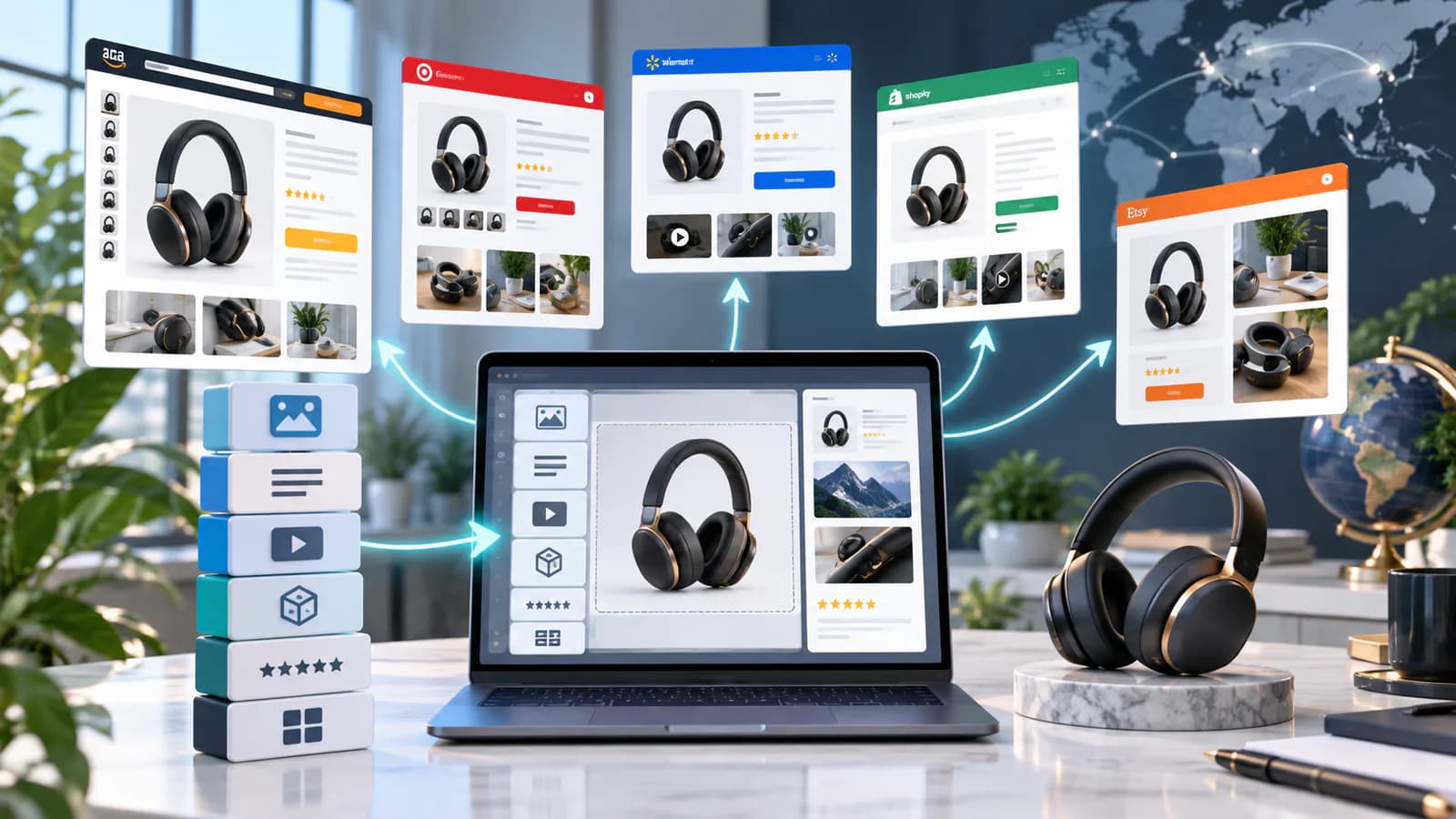
How to Adapt a Master Product Description Across Marketplaces
Keep product facts consistent while adapting titles, attributes, variants and descriptions to each sales channel's requirements.
Read article →

Marketplace Review and Trust Signal Guide
A practical guide to marketplace trust signals that help buyers feel safer before ordering.
Read article →

Pinterest and WooCommerce Strategy Guide
A practical guide to using Pinterest traffic with WooCommerce product and category pages.
Read article →
Author
Anushka Dahanayake
Anushka Dahanayake builds SEO-focused websites, e-commerce platforms, dashboards, and automation systems for businesses worldwide.