
Local Landing Pages SEO Guide for Service Businesses
A practical guide to local landing pages for service businesses that want stronger regional visibility.

A local landing page is useful when it helps someone in a specific area understand whether your business serves them and what working with you involves. Replacing a city name in generic copy does not answer that question well. The page needs real operational relevance, accurate coverage and a clear route to an appropriate inquiry.
For a service business expanding regional visibility, begin with where you can actually deliver the service. The website should reflect that capacity rather than create the appearance of offices, teams or experience the business does not have.
Distinguish an office from a service area
A physical branch and an area you travel to are different facts. Describe them accurately. Do not imply a staffed office in a city when the business operates from another location and visits customers there.
Google's business representation guidelines explain requirements for Business Profiles, including location and service-area considerations. Review the applicable guidance before creating or changing profiles. A website page does not by itself justify an additional profile.
For the landing page, state the coverage in ordinary terms. A business can credibly explain that it serves a district from a nearby base, along with any scheduling or travel limitations that matter to customers.
Decide whether a separate page is warranted
Ask what information would differ from the main service page. Useful distinctions may include available services, delivery arrangements, appointment patterns, regional project examples or an actual local team.
If there is nothing meaningful to add, a clear service-area section on an existing page may be sufficient. Creating many pages simply because place names have search volume can leave the site with repetitive destinations and an unclear hierarchy.
Google's spam policies discuss doorway abuse and scaled content abuse. Use that guidance as a reason to build pages around real customer value, not as a checklist for making near-duplicates appear different enough.
Gather local facts before writing
Interview the person who schedules or delivers the service. Ask about travel time, common property types, access requirements, service availability and questions customers from the area regularly raise.
Collect approved examples from actual work where available. A local project can show relevant experience, but its details must be accurate and permission-appropriate. Do not fabricate a customer or claim a result to fill a page.
If the business is newly serving the area, say what it can offer now. Explain the practical process and coverage without implying a long local history. A useful new-service page does not need invented experience.
Match the service to the local buyer
The page should identify which service is available and who it suits. A commercial pest-control provider may need to distinguish business premises from residential work. A maintenance company may need to explain contract coverage versus one-off callouts.
Avoid using the location as the only differentiator. Explain the actual scope, required preparation and next step. If the offer is identical across areas, local logistics and evidence may provide the useful distinction, but they should be substantive.
Use the Google Business Profile and local SEO guide as a broader reference. Keep market-specific claims tied to the area and service you actually operate.
Write coverage and availability precisely
State the neighborhoods, districts or boundaries that matter operationally without producing an unreadable list of every nearby place. Explain how customers can confirm coverage if they are near the edge.
If availability depends on route schedules or project size, say so. Do not promise immediate attendance everywhere unless the operation can support it. A realistic response expectation is more useful than a permanent emergency claim added for conversion.
For example, a facilities service might offer scheduled visits in a wider region but urgent response only near its base. The landing page should distinguish those arrangements before a customer submits an urgent request that the team cannot meet.
Use proof with geographic context
An approved project example can explain the property type, service delivered and relevant constraints. A testimonial should remain faithful to the customer's actual words and permission.
Local photography can be helpful when it shows the business, team or work. A generic skyline does not prove local service capability. Use images that support the page's claims rather than relying on recognizable scenery alone.
Where case-study detail is limited, show the assessment process, required customer information and the team's relevant qualifications. Label sample scenarios as illustrative. The goal is to reduce uncertainty, not create a false impression of local scale.
Build a clear page hierarchy
Link local pages from a useful service-area hub or the relevant main service page. Let visitors understand the relationship between the overall offer and its regional availability.
Avoid creating several competing pages for the same service and location. A broad city page, a service-city page and a campaign-city page can become confusing if they all answer the same question. Review intent before adding another destination.
The keyword cannibalization guide can help audit existing overlap. Where pages are consolidated, plan relevant destinations and preserve useful information rather than deleting pages solely because one has less traffic.
Keep business information consistent
Review the business name, contact route, address where applicable and service descriptions across the website and relevant profiles. Consistency should reflect the real organization, including genuine differences between branches.
If a branch has a separate phone number or operating schedule, make that clear. If all inquiries go to one central team, do not imply a local number reaches an independent office unless it does.
Structured data should describe the actual business and page content. Do not add fictional location entities to create the appearance of a wider footprint. Ask the implementer to explain the chosen markup and verify that it matches visible facts.
Design the inquiry for local qualification
Ask for the location information needed to confirm serviceability. A postcode, district or address may be appropriate depending on the service, but avoid collecting more detail than the first decision requires.
Explain what happens next. A quote request may lead to a site visit, a remote assessment or a request for photographs. Tell the customer which materials help the team respond and give realistic timing.
Route inquiries to the correct team and preserve the page source where useful. If staff receive leads from unsupported areas, review the page's coverage language before simply increasing advertising or creating more location pages.
An example of a useful regional page
Imagine an office-maintenance company based in one city that serves a neighboring commercial district on scheduled routes. A generic page might repeat the main service copy with the district name inserted throughout.
A useful page instead explains the available maintenance work, scheduled visit arrangements, types of premises served, access information needed and how urgent requests outside the route are handled. It includes an approved example only if the business has one.
The page links to the main maintenance offer for detailed scope and uses a form that asks for the premises location and required work. This gives the regional visitor information that changes the buying decision, without pretending the business has a branch there.
Check a coverage change before it reaches customers
If a route or service area changes, review the relevant landing page, inquiry form and profile information together. Removing an area from one list does not help if another page still promises service there.
Keep a short record of the approved boundary and the person responsible for it. Staff answering inquiries should use the same information as the website. This prevents the local content from becoming a source of avoidable disappointment when operational capacity changes.
Review quality before expanding the page set
Pilot a small number of areas where the business has clear capacity and useful information. Review inquiry relevance, serviceability and customer questions alongside search performance.
If the same unanswered question appears repeatedly, improve the page. If the team cannot supply meaningful differences for another area, reconsider whether a separate page is needed. Expansion should follow operational and editorial readiness.
Maintain the pages when routes, staff or services change. Local accuracy can deteriorate quickly when responsibility is unclear. Assign an owner for coverage and contact information, not only for SEO reporting.
Frequently Asked Questions
Can we create a page for an area without an office?
Yes, when the business genuinely serves it and describes that relationship accurately. Do not imply a physical branch or create an ineligible profile.
How different should location pages be?
Different enough to answer real local questions. There is no useful percentage of unique wording that replaces substantive information and accurate service coverage.
Which service can help build the pages?
Business Website Development covers a business site with service pages, inquiry paths and a measurable launch setup. Bring actual locations, service areas, scheduling rules and approved proof so the pages support regional discovery without creating misleading or repetitive pages.
Related posts
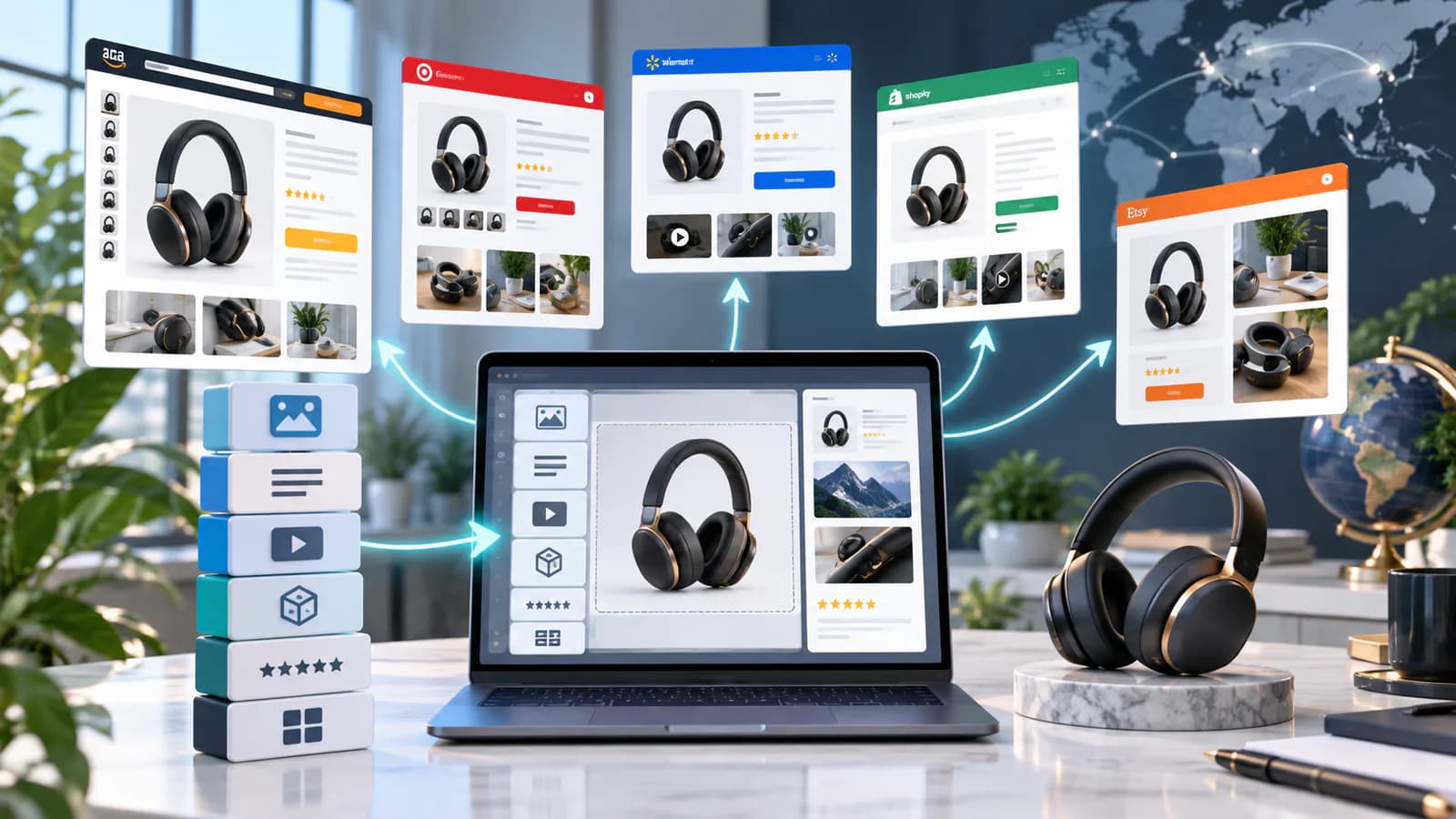
How to Adapt a Master Product Description Across Marketplaces
Keep product facts consistent while adapting titles, attributes, variants and descriptions to each sales channel's requirements.
Read article →

Marketplace Review and Trust Signal Guide
A practical guide to marketplace trust signals that help buyers feel safer before ordering.
Read article →

Pinterest and WooCommerce Strategy Guide
A practical guide to using Pinterest traffic with WooCommerce product and category pages.
Read article →
Author
Anushka Dahanayake
Anushka Dahanayake builds SEO-focused websites, e-commerce platforms, dashboards, and automation systems for businesses worldwide.