
Product Page Optimization Guide for Online Stores
A practical guide to improving product pages so shoppers understand the offer and feel confident enough to buy.
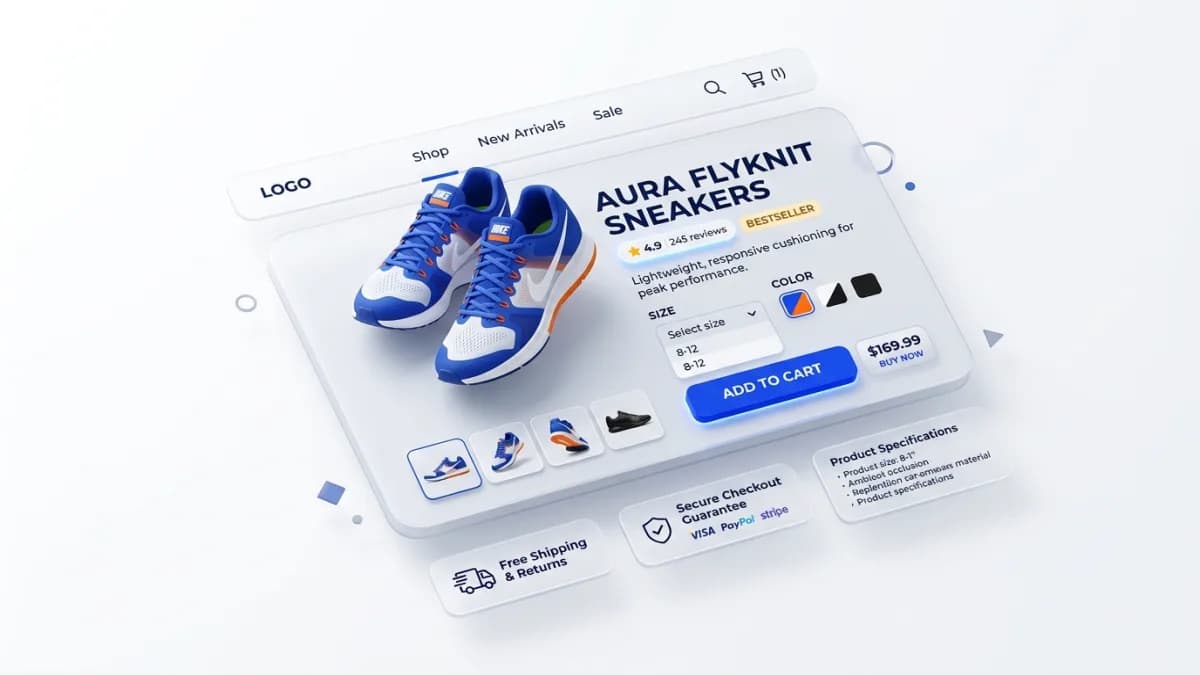
A product page should help someone decide whether a particular item is right for them. That sounds obvious, yet many pages offer a beautiful photograph, a short promotional sentence, and an unexplained set of options. The shopper must do the rest of the work.
Product page optimization means replacing that uncertainty with useful information at the moment it matters. It combines merchandising, product data, imagery, copy, accessibility, and technical reliability. The purpose of Product Page Optimization is a clearer buying decision, not simply a longer description.
Define the Decision Before Writing Copy
Choose one product and identify its likely buyer, use case, alternatives, and main risk of disappointment. A lamp buyer may worry about scale and socket compatibility. A skincare buyer may need ingredient and usage information. A software-template buyer needs to understand formats, licensing, and required tools.
Gather source material from the product owner, supplier specifications, support team, and actual returns. Distinguish verified facts from marketing ideas. If a material has not been certified, do not imply certification. If a performance claim lacks evidence, rewrite it as a factual feature or remove it.
Create a short question inventory. What is it? What comes with it? Will it fit? How is it used? When can it arrive? What happens if it is unsuitable? The page should answer the relevant questions without forcing shoppers through several unrelated screens.
Give the First Screen a Clear Job
The opening area should identify the product, show an informative image, display price and availability, and make the buying action understandable. The product title should describe the item in language the customer recognizes.
For a ceramic serving bowl, a title might include material, size, and style. A poetic collection name can remain, but should not carry the entire description. A shopper arriving from search may have no knowledge of the brand's naming system.
Keep critical conditions near the action. A preorder date, minimum quantity, recurring charge, or requirement to purchase a separate component changes the decision. Hiding that information in an accordion can create avoidable disappointment.
On mobile, check whether option controls and the purchase button remain usable without covering product details. Sticky buying bars must reflect the selected variant and current price. A fixed bar that hides an error message makes the journey less dependable.
Plan Images Around Questions
Give each image a purpose. A main image identifies the product. Detail images show texture and construction. A scale image explains dimensions. A contents image clarifies what arrives in the parcel. Variant images should correspond to the selected option.
Consider a fictional desk-organizer brand. Its lifestyle photograph looks attractive but gives no indication of compartment depth. Adding an overhead photograph with familiar objects and a separate dimensional diagram answers practical questions the hero image cannot.
Do not use imagery that misrepresents color, finish, packaging, or included accessories. If props are shown, explain what is sold. For configurable products, avoid showing an upgraded configuration beside the base price without making the difference clear.
Write alternative text for the information conveyed by meaningful images. Decorative duplicates may not need repeated descriptions. Images containing measurements should have those measurements available as text too, so the information is accessible and easier to update.
Write Benefits That Follow From Features
Useful benefits explain the practical consequence of a real feature. A removable liner can make cleaning easier. A zipped internal pocket can keep small items separate. Neither statement requires exaggerated claims about transforming the customer's life.
Open with a short explanation of the intended use, then provide the details necessary to compare. Use headings for specifications, materials, care, compatibility, and included items where relevant. Do not repeat the same keywords in every heading.
Include limitations. A decorative bowl that is unsuitable for oven use should say so. A downloadable template requiring paid software should identify that dependency. Honest exclusions help attract suitable buyers and reduce misunderstandings.
Avoid copying manufacturer paragraphs unchanged when they fail to answer your customers' questions. Add original explanation grounded in verified product information. Originality is useful because it improves understanding, not because every specification needs a creative synonym.
Make Variants and Availability Unambiguous
Variant selectors should reveal the actual purchasable combinations. If a color is unavailable in one size, show that relationship clearly. Do not let customers reach checkout with an option the inventory system cannot fulfill.
Update price, imagery, SKU-related information, and availability when the selection changes. Check shared links that open a specific variant. A paid ad for a green medium-sized item should not silently land on a red extra-large version.
Explain stock states in operational terms. Ready stock, made to order, preorder, and backorder are different commitments. Give the relevant timing and avoid artificial scarcity messages that are not supported by inventory data.
For bundles, list quantities and component options. Make it clear whether replacing one component changes the price or delivery time. A bundle photograph alone is not a sufficient contents specification.
Put Trust Where the Question Arises
Trust comes from relevant evidence. Product reviews should relate to the item or clearly identified product family. Customer photographs need appropriate permission. Certifications should be verifiable and accurately scoped.
A generic statement that the brand values quality is weaker than a clear explanation of materials, inspection, care, and support. For a technical item, a compatibility table can provide more confidence than a wall of promotional badges.
Explain delivery, returns, and warranty conditions in readable summaries with links to the full policies. Ensure the summary agrees with those policies. Do not imply that every product is returnable if personalized or other excluded products follow different terms.
Connect Search Information to Visible Facts
Use a unique, descriptive page title and a concise search description. Keep the established URL when possible; changing a slug merely to add a keyword creates migration work without assuring better results.
Google's product structured-data overview distinguishes product snippets from merchant-listing experiences. Select markup appropriate to the page, and keep price and availability consistent with what shoppers can see. Eligible markup does not guarantee a particular search appearance or ranking.
Related products and buying guides should help a real decision. Link a compatibility guide beside the relevant specification, or a size comparison beside the selector. Avoid filling the page with unrelated links merely to increase link counts.
Measure the Right Failure Point
Review product views, variant interaction, add-to-cart behavior, purchases, and product-specific returns. Interpret these alongside traffic source and stock availability. A popular out-of-stock product can attract many views with few purchases despite a clear page.
Support questions are an additional diagnostic. If customers repeatedly ask whether a charger is included, the page has not answered that question clearly enough. Moving the answer may be more useful than adding another paragraph at the bottom.
When testing a change, define the intended behavior in advance. A new dimensional image should help customers assess fit. Watch downstream suitability and returns as well as immediate cart activity. Higher engagement alone does not establish better buying decisions.
The product-page SEO implementation guide develops the relationship between copy, images and structured data. The collection SEO guide is useful when shoppers cannot find suitable products before reaching these pages.
Prepare a Repeatable Editorial Handover
Start with a representative product from each meaningful type, such as a simple item, a configurable product, and a bundle. Solve the information architecture for those cases before applying changes across the catalog.
Record who owns specifications, imagery, stock messages, policies, and reviews. Product pages degrade when prices change but promotional images do not, or when a supplier revises a component without updating compatibility copy.
A professional optimization brief should include sample URLs, customer questions, approved product facts, desired measurements, and operational constraints. Ask for a page that works with real catalog data, not only an ideal mockup.
The strongest product page gives suitable customers enough confidence to buy and helps unsuitable customers recognize the mismatch early. That is a healthier commercial outcome than persuading everyone indiscriminately.
Frequently Asked Questions
Can we improve a page before producing new photographs?
Yes. Correct dimensions, contents, compatibility and delivery information immediately when reliable facts are available. Identify which remaining questions require visual evidence and commission those images deliberately. Text improvements should not be delayed while an unrelated lifestyle shoot is arranged.
Should discontinued products disappear immediately?
Decide based on whether the page still helps customers, has a relevant replacement, or supports previous purchases. Clearly state availability and provide a useful next step. Coordinate permanent removal or redirects with the site's search and support responsibilities.
Related posts

Product Page SEO Services Guide for E-commerce Brands
A practical guide to product page SEO services for Shopify, WooCommerce and marketplace-connected stores.
Read article →

Shopify vs WooCommerce Checkout Comparison
A practical checkout comparison for store owners choosing between Shopify and WooCommerce.
Read article →

E-commerce Requirements Workshop: Discovery and Approval
Turn stakeholder assumptions into an approved e-commerce brief using sample orders, decision logs and testable acceptance criteria.
Read article →
Author
Anushka Dahanayake
Anushka Dahanayake builds SEO-focused websites, e-commerce platforms, dashboards, and automation systems for businesses worldwide.