
Selling on Wish Marketplace: Complete Merchant Guide
A practical Wish merchant guide covering eligibility, verification, product compliance, accurate listings, unit economics, fulfillment, tracking, customer experience, integrations, and performance monitoring.
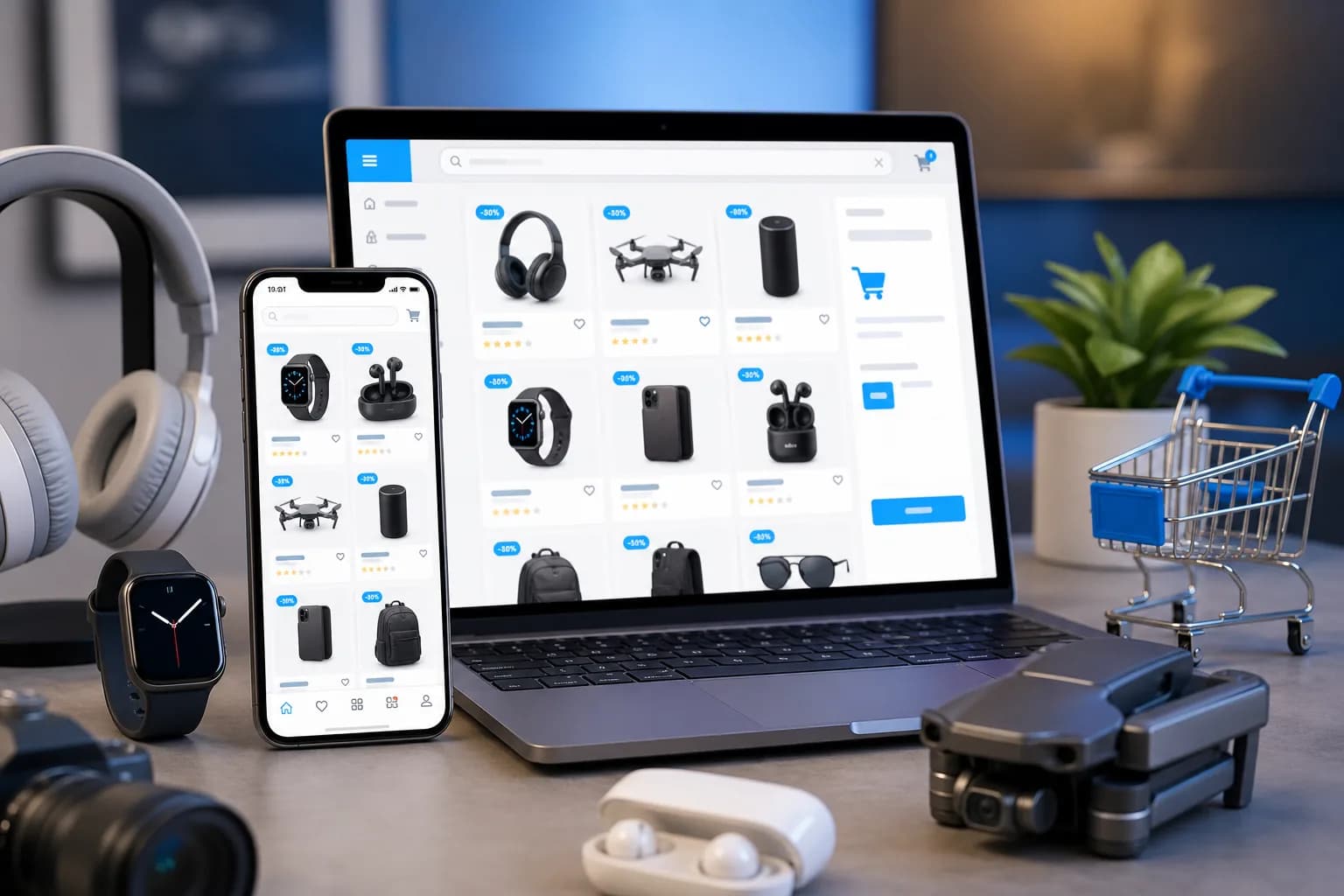
Selling on Wish should be approached as a marketplace operations project, not as a shortcut for uploading a large catalog. A merchant must qualify for access, verify the store, list only legal and policy-compliant products, present each variation accurately, price from complete unit economics, fulfill with valid tracking, and monitor customer and operational performance.
The platform's rules, fees, programs, supported regions, integrations, and onboarding process can change. Verify current requirements in the Merchant Dashboard, Merchant Policy, and Wish Merchant Help Center before acting on any fixed number in a guide.
This article provides a controlled workflow for evaluating and launching a Wish sales channel. It does not promise impressions or sales. It focuses on the information quality, compliance, fulfillment, pricing, and measurement that a merchant can manage.
Key Takeaways
- Confirm current merchant access, regional availability, category eligibility, and verification requirements before preparing a catalog.
- Audit every product for legal, safety, intellectual-property, and Wish policy compliance.
- Keep the title, primary image, description, price, and variations consistent.
- Show the exact item being sold and make dimensions, materials, compatibility, and included components clear.
- Calculate profit after product cost, shipping, commission, transaction costs, listing fees where applicable, refunds, and operations.
- Use unique SKUs and synchronize stock across channels.
- Fulfill within the active policy window using accepted carriers and valid tracking.
- Monitor Wish Standards, infractions, refunds, tracking, customer ratings, and underperforming products.
- Launch a small, representative pilot before expanding the catalog.
- Keep a policy-change log because marketplace requirements are not permanent.
Is Wish a Suitable Channel for Your Business?
Wish can be considered when a merchant has visually understandable products, competitive delivered pricing, sufficient contribution margin, reliable inventory, trackable shipping, and the operational capacity to maintain accurate listings.
Suitability depends less on an arbitrary price ceiling and more on the complete customer promise. Ask:
- 1Can the item be understood quickly from an honest primary image and precise title?
- 2Can every size, color, model, and included component be represented accurately?
- 3Can the order be shipped within Wish's current requirements?
- 4Will the carrier produce tracking events that Wish accepts?
- 5Is the delivered price competitive after every fee and expected loss?
- 6Can returns, refunds, customer support, and compliance be handled in each destination?
- 7Can inventory be synchronized with other stores?
- 8Does the product comply with platform rules and all applicable laws?
Wish may be a poor fit for products with uncertain provenance, fragile margins, unreliable suppliers, complex customization, untrackable fulfillment, high return rates, or regulatory requirements the merchant cannot manage.
Do not confuse access to a listing tool with permission to sell a product in every country. The merchant remains responsible for product, tax, packaging, consumer, environmental, safety, privacy, and intellectual-property obligations in relevant markets. Obtain qualified professional advice where the risk warrants it.
Step 1: Confirm Merchant Access and Verification
Wish's published access guidance describes an invitation process in which prospective merchants submit business information for evaluation. The process shown to a merchant may vary, so start at the official merchant entry point and follow the live workflow.
Prepare accurate records such as:
- Legal business or individual identity
- Registration details where applicable
- Business address and contact information
- Beneficial owner or representative information
- Tax information
- Payout details
- Product categories and source
- Existing sales channels
- Fulfillment locations
- Evidence requested for verification
Wish's current store-verification guidance distinguishes verification flows and may request identity or business documentation.
Use information that matches official records. Do not create duplicate stores, use another entity's documents, or alter records to bypass eligibility. Secure the account with a unique password, two-factor authentication, limited staff access, and named ownership for finance, catalog, compliance, and fulfillment.
Step 2: Complete a Product Compliance Review
A product should not enter the Wish feed until it passes a documented compliance review.
Check prohibited and restricted products
Wish's prohibited-products policy states that prohibited listings are not allowed and that violations can lead to infractions. Examples include illegal products, products that infringe intellectual-property rights, and certain recalled goods, but the examples are not a complete list.
Review:
- Wish Merchant Policy
- Prohibited-product reasons
- Destination-country laws
- Product-safety and labeling rules
- Age restrictions
- Import and customs restrictions
- Batteries, chemicals, cosmetics, food, supplements, medical claims, and other controlled categories
- Recall databases relevant to the market
- Packaging and environmental obligations
Retain evidence such as supplier invoices, test reports, declarations, safety documents, licensing, brand authorization, and recall checks according to legal and business requirements.
Protect intellectual property
Wish prohibits counterfeit, fake, and knock-off products. A merchant must have the right to use every brand name, logo, photograph, illustration, design, character, and piece of copy in the listing.
Do not:
- Select a popular brand for an unbranded item
- Hide or blur a logo on an unauthorized product
- Use “inspired by” to trade on protected branding
- Copy another seller's images or description
- Sell a replica without authorization
- Add unrelated trademarks as search terms
When authenticity or licensing is uncertain, do not list the product until the rights are confirmed.
Control supplier risk
Dropshipping does not transfer responsibility to a supplier. Before listing, obtain a sample and inspect:
- Exact materials and construction
- Dimensions and weight
- Color and finish
- Packaging
- Labels and instructions
- Included parts
- Variant accuracy
- Safety information
- Barcode or product identifiers
- Shipping time and tracking quality
Recheck samples when the factory, material, design, packaging, or specification changes.
Step 3: Create a Reliable Product Record
Maintain one master record for each product and variation.
Include:
- Parent product ID
- Unique variation SKU
- Product name
- Brand status
- Category and attributes
- Material and composition
- Dimensions and measurement method
- Weight
- Color
- Model or compatibility
- Included and excluded components
- Safety warnings and instructions
- Cost of goods
- Packaging cost
- Fulfillment cost
- Inventory by location
- Image rights and files
- Destination restrictions
- Supplier and batch information
- Marketplace listing IDs
A central record prevents the Wish listing, warehouse label, support response, and other sales channels from describing different products.
Unique SKUs are essential. Do not reuse one SKU for different sizes or colors. If an identifier changes, preserve a mapping between the old and new values so orders and inventory can still be reconciled.
Step 4: Choose a Listing Method
Wish's current product-listing overview points merchants to manual creation, bulk upload, variation, category, attribute, and API workflows.
Manual listing
Suitable for a small pilot or unusual products requiring careful review. It reduces transformation complexity but becomes difficult to govern at scale.
Bulk file
Useful for a prepared catalog. Validate column names, encodings, categories, attributes, variations, image URLs, and error reports. Import a small sample first.
Integration or API
Appropriate for multi-channel inventory and larger operations. An integration needs logging, retries, rate-limit handling, authentication security, error alerts, and reconciliation. “Connected” does not mean synchronized correctly.
For every route, maintain a change log and a rollback copy of the last accepted feed.
Step 5: Write Clear and Accurate Wish Listings
Wish's misleading-listing guidance says the primary image, title, description, variations, and price must consistently reflect the item being sold.
Listing optimization therefore begins with accuracy.
Product title
Lead with the product's real identity and most important verified distinctions.
A practical structure is:
Product type + defining material or feature + size/model + relevant use
Examples:
- Stainless steel insulated bottle, 750 ml, leak-resistant lid
- Cotton canvas storage basket, 35 cm, reinforced handles
- USB-C braided charging cable, 2 m, compatible models listed
Avoid:
- Keyword lists
- Unrelated brands
- Repeated adjectives
- Unsupported “best” or “number one” claims
- A bundle name when one item is sold
- A premium product in the title when the actual item is an accessory
- Specifications that apply to only one variation
Primary image
The primary image must make the sold item unmistakable. Wish warns that a listing can be misleading when the product is not the focus, the image suggests a different item, or size is misrepresented.
Use:
- The exact product
- A clean, clear composition
- Sufficient resolution
- Accurate color and proportion
- Only included components, or unmistakable disclosure
- A view that distinguishes an accessory from the device it fits
Do not use a phone as the visual focus when selling only a phone case. Do not show a five-piece set when the price buys one piece. Lifestyle context can help in secondary images, but it must not obscure the offer.
Image sequence
Use the gallery to answer questions:
- 1Exact product and included quantity
- 2Alternative angle
- 3Dimensions with units
- 4Important feature
- 5Material or texture
- 6Variation comparison
- 7Included components
- 8Packaging or instructions
- 9Honest use context
Do not alter images so heavily that the delivered color, size, surface, or performance appears different.
Description
Write for a buyer deciding from a small screen.
Recommended order:
- 1One-sentence product identification
- 2Key features
- 3Materials and dimensions
- 4Compatibility or fit
- 5Package contents
- 6Use and care instructions
- 7Safety or regulatory information
- 8Variation explanation
- 9Shipping-relevant facts
Example:
Reusable stainless steel insulated bottle with a 750 ml capacity and screw lid. Measures 27 cm high and 7.5 cm wide. Package contains one bottle and one lid; decorative accessories in lifestyle photographs are not included. Hand washing is recommended. Not suitable for carbonated liquids.
Use facts the product can support. Avoid medical, environmental, durability, waterproof, certification, or performance claims without appropriate evidence.
Step 6: Build Honest Variations
Variation mistakes create refunds, customer dissatisfaction, inventory mismatches, and policy risk.
For each variation:
- Use one unique SKU.
- Select the correct image.
- State the real color, size, model, quantity, or configuration.
- Set the correct price and inventory.
- Ensure it belongs to the same underlying product.
- Remove unavailable combinations.
- Confirm the warehouse uses the same identifiers.
Do not use a cheap unrelated variation to make the displayed starting price look artificially low. Do not group accessories and the main device when the listing presentation can cause confusion.
Build a pre-publication matrix:
| SKU | Color | Size/model | Included quantity | Price | Stock | Image checked |
|---|---|---|---|---|---|---|
| BOT-750-BLK | Black | 750 ml | 1 bottle | Verified | Verified | Yes |
| BOT-750-BLU | Blue | 750 ml | 1 bottle | Verified | Verified | Yes |
A second person should review high-risk or high-volume listings against the physical sample.
Step 7: Calculate Unit Economics Before Pricing
Do not set a price from competitor screenshots alone. Build a contribution model for each product and destination.
Contribution formula
Net contribution = customer revenue − commission − transaction and listing costs − product cost − packaging − fulfillment − expected refunds and losses − allocated operating cost
Include:
- Product acquisition or manufacturing
- Inbound freight and duties
- Packaging and labeling
- Pick and pack
- Outbound shipping
- Marketplace commission
- Per-item transaction charges
- Listing fees above any applicable free threshold
- Payout or currency conversion costs
- Refunds, defects, replacements, and non-delivery
- Support labor
- Taxes the business bears
- Advertising
- Integration and software costs
Wish's published commission guidance describes progressive structures influenced by destination, category, and Wish Standards tier, with transaction fees. Wish also publishes listing-fee guidance tied to active-listing thresholds and tier.
These details may change. Retrieve the current rate and per-order commission from the Merchant Dashboard and Merchant Policy rather than embedding one percentage in a permanent pricing sheet.
Scenario testing
Model at least:
- Expected case
- Higher shipping cost
- Currency movement
- Discount or promotion
- Refund
- Replacement
- Lost parcel
- Advertising spend
- Lower Wish Standards tier or changed fee
- Multi-quantity order
Set a minimum contribution threshold and automatically flag listings that fall below it.
Avoid deceptive discounting
Reference and strikethrough prices must reflect active rules and applicable consumer law. Do not invent a high comparison price to manufacture urgency.
Compete through total value, reliable delivery, accurate products, multipacks that genuinely contain the stated quantity, and better information—not an unprofitable race to the bottom.
Step 8: Plan Inventory and Fulfillment
Choose an operating model
Self-fulfillment gives direct control but requires staff, space, systems, carrier relationships, and quality checks.
Third-party logistics can improve capacity and geographic reach but adds storage, receiving, pick, packaging, integration, and return costs.
Supplier fulfillment reduces inventory handling but exposes the merchant to stock inaccuracies, variable quality, slow dispatch, packaging problems, and weak tracking.
Select by measured service and economics, not by the lowest quoted shipping rate.
Understand the active fulfillment window
Wish's published fulfillment instructions currently say merchants must mark orders shipped within one to five calendar days and provide a valid tracking number and carrier to be paid. Unfulfilled orders can be refunded and products or accounts can be affected.
Because policies can change, use the deadline displayed for each live order and check the current Merchant Policy.
Marking an order shipped is not the same as handing it to a carrier. Create a process for:
- 1Order ingestion
- 2Payment and risk state
- 3SKU allocation
- 4Pick and quality check
- 5Correct packing and label
- 6Carrier handoff
- 7First tracking scan
- 8Delivery monitoring
- 9Exception handling
- 10Return or refund reconciliation
Use valid tracking
Wish considers tracking performance in Wish Standards. A valid number must correspond to the correct carrier, destination, and actual parcel.
Never:
- Reuse tracking for unrelated recipients
- Upload a number before the parcel exists
- Select the wrong carrier
- Change digits to make a number pass validation
- Mark shipped only to stop a deadline
- Ignore parcels with no first scan
Monitor orders without a carrier scan and escalate quickly. Test carrier services before launching a destination.
Prevent overselling
For multi-channel inventory, define the source of truth and update frequency.
Use:
- Unique channel-to-master SKU mapping
- Safety stock for synchronization delay
- Reservation rules
- Failed-sync alerts
- Daily count reconciliation
- Manual emergency stop
- Clear handling for returns and damaged stock
Do not continue selling from a stale feed when the integration fails.
Step 9: Manage Customer Experience and Refund Risk
Accurate expectation-setting is the first customer-service tool.
Track reasons such as:
- Item not as described
- Wrong size, color, or model
- Missing component
- Damage
- Defect
- Late delivery
- Non-delivery
- Accidental order
- Compatibility issue
- Quality below expectation
Wish's item-not-matching policy places responsibility on merchants when delivered products do not match the listing, including wrong sizes or colors.
For every material refund reason:
- 1Identify affected SKU and supplier batch.
- 2Review listing promise.
- 3Check images, measurement, and variation labels.
- 4Inspect warehouse picking.
- 5Check carrier behavior.
- 6Correct the root cause.
- 7Pause the listing when continued sales would repeat the failure.
- 8Record evidence and outcome.
Do not manipulate reviews or pressure customers to conceal legitimate problems. Use authentic feedback to improve the product and listing.
Step 10: Monitor Wish Standards and Account Health
Wish Standards considers performance factors such as customer ratings, order fulfillment, product-quality refunds, confirmed fulfillment speed, valid tracking, logistics refunds, policy compliance, and underperforming products. Review the current Wish Standards overview.
Build a weekly dashboard:
- Orders and gross sales
- Net payout
- Contribution by SKU and destination
- Fulfillment rate
- Dispatch time
- Valid tracking
- Delivery time
- Refund rate and reason
- Customer rating
- Policy infractions
- Underperforming products
- Listing-fee exposure
- Inventory sync failures
- Support volume
- Advertising spend and contribution
Wish Standards tier can influence platform benefits and costs, but do not optimize one metric by creating another problem. For example, marking parcels shipped without carrier handoff can improve an internal timestamp while damaging tracking, delivery, and customer satisfaction.
Dispute an apparent error through the official workflow with precise evidence. Do not rely on a dispute as a substitute for operational correction.
Step 11: Integrate Wish With the Wider Commerce Stack
Map the full data flow:
Product information system → Wish listing → order system → inventory → warehouse → carrier → tracking → finance → customer support
Define ownership for:
- Product data
- Price updates
- Inventory
- Orders
- Cancellations
- Tracking
- Refunds
- Payout reconciliation
- Tax records
- Policy alerts
- Credentials and API access
Daily reconciliation
Compare:
- Wish orders versus order-management records
- Ordered SKUs versus allocated stock
- Shipped orders versus carrier manifests
- Tracking uploads versus accepted tracking
- Refunds versus inventory and finance
- Payouts versus expected order-level net amounts
- Integration errors versus resolved tickets
An automated sync still needs reconciliation because errors can be accepted silently or affect only part of the catalog.
For broader marketplace inventory practices, see our eBay listing SEO and operations guide and vintage multichannel selling guide.
Step 12: Launch a Controlled Pilot
Start with a small group of products representing real complexity, not only the easiest items.
Choose products with:
- Confirmed compliance and rights
- Physical samples
- Reliable supply
- Accurate dimensions and variants
- Trackable fulfillment
- Adequate margin
- Manageable return risk
- Stable images and product data
A pilot plan should specify:
- SKUs and destinations
- Start and review dates
- Inventory cap
- Pricing assumptions
- Fulfillment owner
- Support owner
- Stop-loss thresholds
- Success metrics
- Expansion decision
Pilot stages
Stage 1: Listing QA
Publish a limited set and verify presentation, variation selection, price, inventory, images, shipping, and destination eligibility.
Stage 2: First orders
Manually inspect every order from pick through tracking and payout.
Stage 3: Controlled volume
Increase stock only after tracking, refunds, contribution, and catalog synchronization are stable.
Stage 4: Expansion
Add products that use the proven operating model. Do not multiply unresolved failure patterns.
Do not assume a fixed starting number such as 20 or 50 SKUs is correct for every merchant. The right pilot is the smallest set that produces meaningful operational evidence without creating uncontrolled exposure.
Wish Listing Quality Checklist
Compliance
- [ ] Product allowed by Wish
- [ ] Legal in each destination
- [ ] Safety and labeling obligations reviewed
- [ ] Intellectual-property rights verified
- [ ] Supplier and product evidence retained
- [ ] Claims supported
- [ ] Destination restrictions configured
Listing
- [ ] Title describes the exact item
- [ ] Primary image focuses on what is sold
- [ ] Quantity and included components are clear
- [ ] Dimensions and units stated
- [ ] Materials and compatibility accurate
- [ ] Each variation has correct SKU, image, price, and stock
- [ ] Category and attributes accurate
- [ ] Description matches sample and packaging
- [ ] No unrelated keywords or brands
Pricing
- [ ] Current commission checked
- [ ] Transaction and listing costs considered
- [ ] Shipping modelled by destination
- [ ] Refund and loss allowance included
- [ ] Currency and payout costs included
- [ ] Promotion remains profitable
- [ ] Minimum contribution threshold met
Fulfillment
- [ ] Stock available
- [ ] Handling process tested
- [ ] Carrier accepted
- [ ] Tracking produces valid scans
- [ ] Packaging protects the product
- [ ] Deadline monitored
- [ ] Exceptions have an owner
- [ ] Inventory sync and alerts work
Monitoring
- [ ] Orders reconciled daily
- [ ] Wish Standards reviewed
- [ ] Infractions investigated
- [ ] Refund reasons reviewed by SKU
- [ ] Payouts reconciled
- [ ] Integration errors resolved
- [ ] Underperforming listings paused or improved
- [ ] Policy changes logged
For catalog support, review our product upload management service.
Frequently Asked Questions
Can anyone open a Wish merchant account?
Wish's published guidance describes an invitation and evaluation process. Availability and onboarding can vary, so use the live official merchant flow and do not purchase or borrow an account.
How much does it cost to sell on Wish?
Costs can include progressive commission, transaction fees, listing fees above applicable thresholds, payout or conversion costs, advertising, fulfillment, refunds, and operating expenses. Rates can depend on destination, category, and Wish Standards tier. Confirm current terms in the Merchant Dashboard and Merchant Policy.
What products sell best on Wish?
There is no universal product formula. Evaluate genuine customer demand, policy eligibility, delivered price, visual clarity, margin, fulfillment reliability, refund risk, and competition. A product that receives orders but loses money or generates policy problems is not a winner.
How many products should a new merchant list?
Use the smallest representative pilot that can validate listing accuracy, tracking, refund risk, unit economics, and integrations. Expanding a flawed catalog creates more errors and may increase listing-fee exposure.
Does Wish require tracking?
Wish's published fulfillment guidance requires a valid tracking number and carrier for newly released orders and connects payment and performance to fulfillment information. Follow the deadline and tracking requirements shown for each order.
Can I dropship on Wish?
A supplier-fulfillment model still leaves the merchant responsible for compliance, accurate listings, stock, product quality, dispatch, tracking, delivery, refunds, and customer experience. Use it only after sampling products and testing the supplier and carrier.
How do I optimize a Wish listing?
Make the exact product easy to understand. Use a clear title, accurate primary image, useful gallery, complete dimensions and materials, consistent variations, honest price, correct category, and a description that states what is included. Avoid irrelevant keyword repetition.
What is Wish Standards?
Wish Standards is Wish's merchant performance program. Its published metrics include customer ratings, fulfillment, refunds, tracking, speed, compliance, and underperforming products. Merchants can review performance in the dashboard.
Should Wish be my only sales channel?
Channel concentration creates risk. Wish can be one part of a portfolio when inventory, pricing, customer service, and finance are centrally controlled. Keep owned-store and other marketplace strategies based on their own economics and customer value.
Final Recommendation
Treat Wish as a controlled marketplace operation. Confirm access and policy eligibility, verify every product, create accurate listings, calculate complete unit economics, and prove fulfillment with valid tracking.
Start small enough to inspect every failure. Reconcile orders, inventory, tracking, refunds, and payouts. Use Wish Standards and customer feedback to identify root causes, then expand only the products and processes that remain compliant, reliable, and profitable.
The goal is not the largest possible catalog. It is a catalog the business can accurately describe, legally sell, reliably deliver, and financially sustain.
Related posts

Passkeys and MFA for Small Teams: What to Choose and How to Roll It Out
A practical guide to multi-factor authentication for small businesses: SMS codes vs authenticator apps vs passkeys and security keys, which accounts to protect first, how to avoid lockouts with recovery codes and backup methods, and a phased rollout plan for a small team.
Read article →
Shopify vs WooCommerce Checkout Comparison
A practical checkout comparison for store owners choosing between Shopify and WooCommerce.
Read article →

E-commerce Requirements Workshop: Discovery and Approval
Turn stakeholder assumptions into an approved e-commerce brief using sample orders, decision logs and testable acceptance criteria.
Read article →
Author
Anushka Dahanayake
Anushka Dahanayake builds SEO-focused websites, e-commerce platforms, dashboards, and automation systems for businesses worldwide.